The Top End of Australia, a land of ancient landscapes and vibrant cultures, holds a magnetic allure for the adventurous soul. As a seasoned traveler who has spent considerable time exploring its rugged beauty, I can attest that the journey truly begins in Darwin, a tropical capital buzzing with an energy as unique as its sunsets. Yet, for many, the grand question remains: which gateway to this wild frontier promises the most profound experience? Is it the sprawling, culturally rich wilderness of Kakadu, or the accessible, waterfall-laden paradise of Litchfield?
This isn't merely a logistical choice; it's a philosophical one, a decision that shapes the very essence of your Top End adventure. Both national parks offer an unforgettable immersion into Australia's natural and cultural heritage, yet they cater to distinct desires and travel styles. Join me as we delve into the heart of this great park debate, comparing and contrasting these two iconic destinations to help you discover which gateway—or perhaps both—will lead you to your most cherished memories.
The Great Park Debate: Kakadu vs. Litchfield
For anyone arriving in Darwin, the whisper of the wilderness is immediate and intoxicating. The city itself, with its rich history, multicultural markets, and stunning harbour, is a destination in its own right, but it also serves as the perfect springboard to the vast national parks that define the Top End. Travelers often find themselves at a crossroads, pondering the choice between two of Australia's most celebrated natural treasures: Kakadu and Litchfield National Parks.
Kakadu, a UNESCO World Heritage site, is often perceived as the quintessential Top End experience, a place of immense scale and profound Indigenous cultural significance. It demands time, planning, and a deep appreciation for ancient stories and untamed nature. Litchfield, on the other hand, beckons with its promise of refreshing waterfalls and accessible natural beauty, an ideal escape for those seeking immediate gratification and ease of exploration.
The "great park debate" isn't about one being inherently better than the other; it's about understanding what each offers and aligning it with your personal travel aspirations. Do you crave an immersive journey into ancient Aboriginal culture and vast, challenging landscapes, or are you drawn to the simple, joyous pleasure of cooling off in pristine natural pools surrounded by lush greenery? Let's explore each park in detail, drawing on my own experiences to illuminate their unique charms.

Kakadu: The Vast Wilderness Gateway
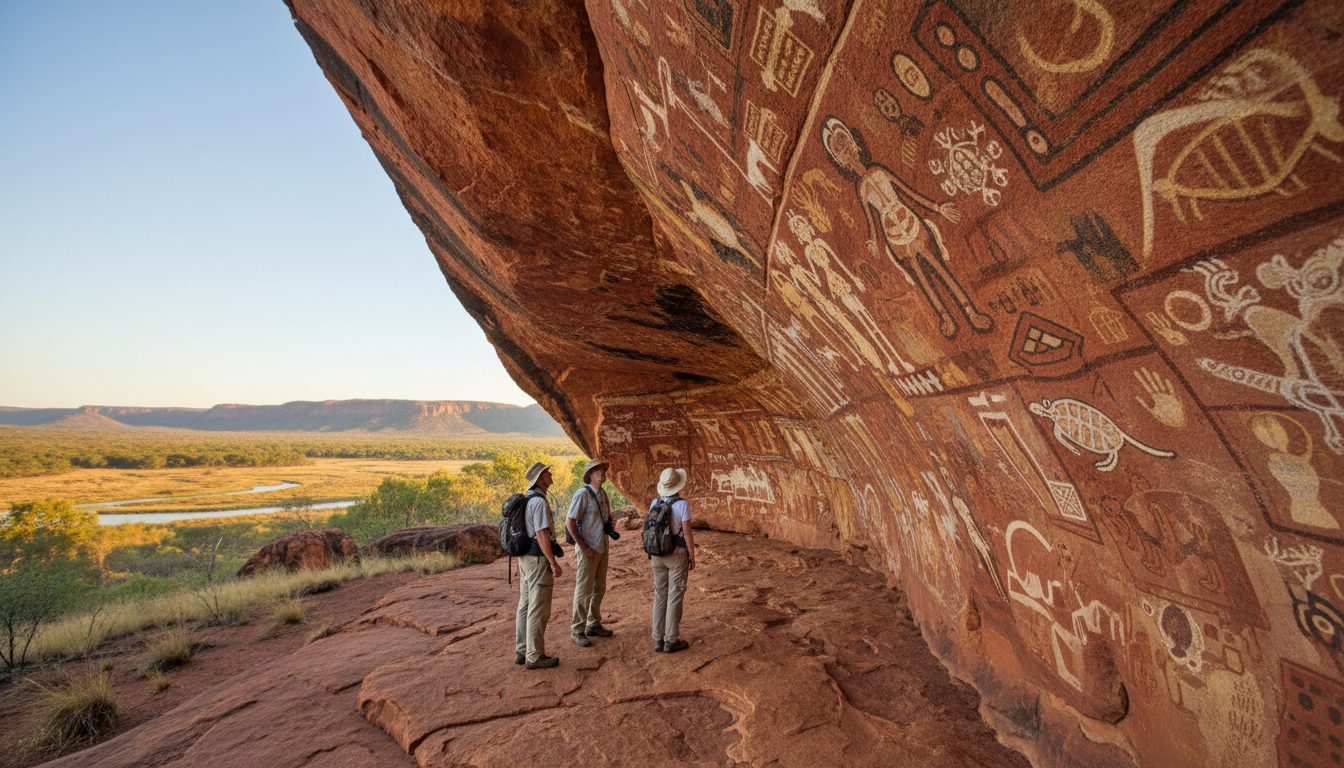
Kakadu National Park is not just a park; it's an entire world unto itself, a living museum stretching across nearly 20,000 square kilometres. Designated a UNESCO World Heritage site for both its natural and cultural values, it's a place where ancient Aboriginal culture intertwines seamlessly with breathtaking landscapes. My first journey into Kakadu felt like stepping back in time, into a realm where the land itself breathes history.
The sheer scale of Kakadu is difficult to comprehend until you're there. It encompasses an incredible diversity of ecosystems: vast floodplains teeming with wildlife, dramatic escarpments carved by millennia of erosion, lush monsoon rainforests, and tranquil billabongs. This ecological richness supports an astonishing array of flora and fauna, including over one-third of Australia's bird species and, of course, the infamous saltwater crocodile.
Indigenous Culture and History
What truly sets Kakadu apart, for me, is its profound cultural heritage. This land has been home to Aboriginal people for at least 65,000 years, making it one of the oldest living cultures on Earth. The park is jointly managed by its traditional owners, the Bininj/Mungguy people, and Parks Australia, ensuring that their ancient stories and traditions continue to thrive.
Visiting sites like Ubirr and Nourlangie (Burrungkuy) is a deeply spiritual experience. I vividly recall standing before the intricate rock art galleries at Ubirr, where images depict ancestral beings, hunting scenes, and creation stories that stretch back tens of thousands of years. As the sun dipped below the horizon, casting long shadows across the floodplains, a ranger shared stories passed down through generations. It wasn't just art; it was a living narrative, a tangible connection to an unbroken chain of human existence and wisdom. This feeling of walking on sacred ground, of witnessing history etched into stone, is something that stays with you long after you've left.
Wildlife Encounters
Kakadu is a paradise for wildlife enthusiasts. The Yellow Water Billabong cruise, an absolute must-do, offers unparalleled opportunities to witness the Top End's iconic creatures in their natural habitat. On my first cruise, the silence was broken only by the gentle hum of the boat and the calls of exotic birds. We glided past colossal saltwater crocodiles, their eyes just above the water's surface, observing them with a mixture of awe and healthy respect.
The sky above teemed with an incredible diversity of birdlife – jabirus, brolgas, majestic white-bellied sea eagles circling overhead. It's an ecosystem in perfect balance, a testament to the resilience of nature and the careful stewardship of its traditional owners. Each sighting felt like a privilege, a glimpse into a world largely untouched by modern civilization.
Activities and Experiences
Beyond rock art and wildlife cruises, Kakadu offers a wealth of activities. There are numerous walking trails, ranging from easy boardwalks to challenging multi-day hikes, leading to stunning viewpoints and seasonal waterfalls like Jim Jim Falls and Twin Falls (which often require 4WD access and are best visited in the dry season). Ranger-led tours provide invaluable insights into the park's ecology, culture, and history, enriching the experience far beyond what a guidebook could offer.
One of my most cherished memories is a bush tucker walk with an Indigenous guide, who pointed out edible plants and explained their medicinal uses, sharing knowledge passed down through generations. This kind of experiential learning, directly from those who know the land intimately, transforms a simple visit into a profound cultural exchange.
Logistics and Planning
Kakadu demands careful planning. Its vastness means that exploring it fully requires several days, ideally three to five. Accommodation ranges from camping and caravanning to lodges and hotels in Jabiru and Cooinda. While some areas are accessible by 2WD, many of the most spectacular sites, especially during the wet season, require a 4WD vehicle. It's a journey that asks for patience and preparation, but the rewards are immeasurable.
Litchfield: The Accessible Adventure
In stark contrast to Kakadu's grand scale and cultural depth, Litchfield National Park offers a different kind of Top End magic: readily accessible natural beauty, spectacular waterfalls, and refreshing swimming holes. Located just an hour and a half's drive south of Darwin, Litchfield is often hailed as the perfect day trip or a shorter, more relaxed escape from the city's humidity. My visits to Litchfield have always been about pure, unadulterated joy and relaxation, a refreshing balm for the soul.
Litchfield's charm lies in its concentrated beauty. Within a relatively compact area, the park boasts a series of magnificent waterfalls that cascade into crystal-clear pools, inviting visitors to swim, cool off, and simply revel in the natural splendour. It's a place where the landscape feels designed for pleasure, an oasis in the tropical heat.
Proximity and Accessibility
One of Litchfield's greatest assets is its proximity to Darwin. The drive is straightforward, mostly on sealed roads, making it easily accessible for all types of vehicles. This ease of access means you can leave Darwin in the morning and be swimming under a waterfall by lunchtime, making it an incredibly popular choice for families and those with limited time. The convenience allows for spontaneous trips, a luxury often not afforded by Kakadu.
Waterfalls and Swimming Holes
Litchfield is synonymous with its stunning waterfalls and natural plunge pools. Each has its own distinct character, offering unique experiences.
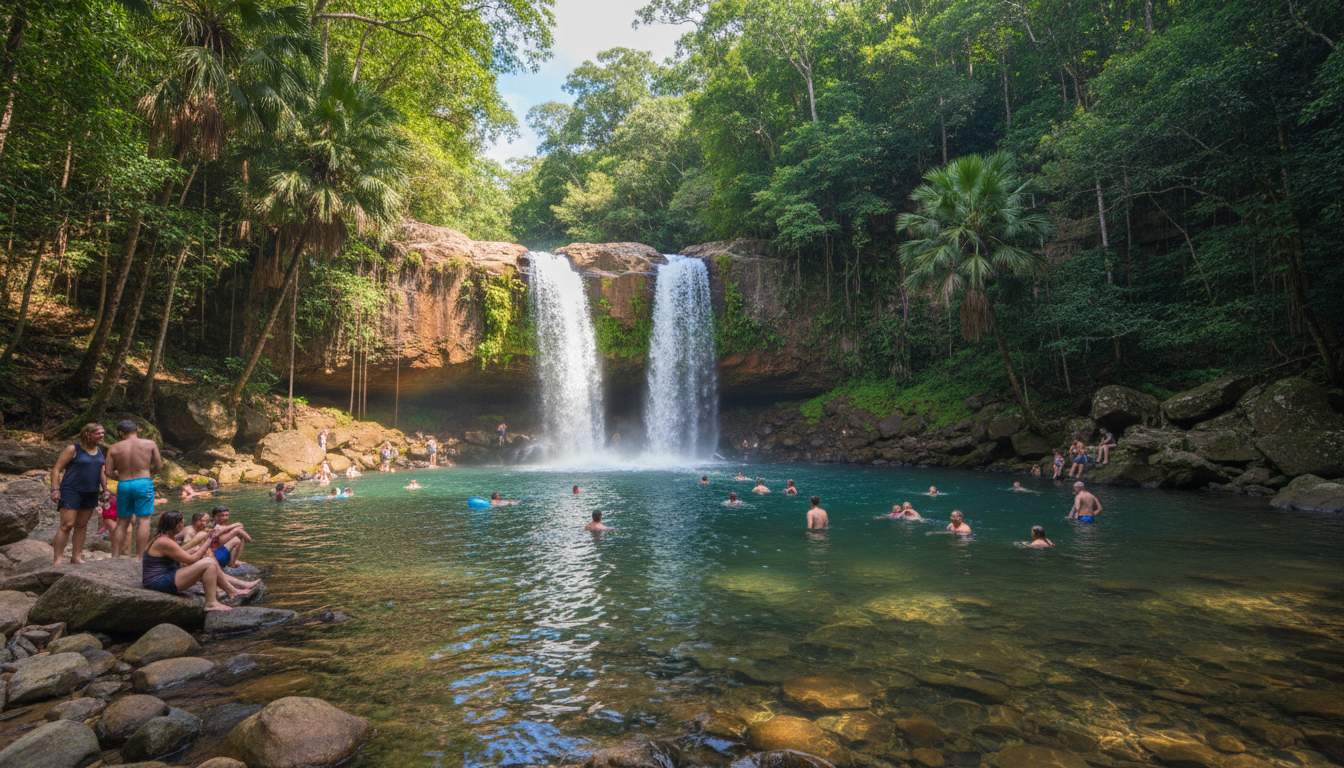
- Florence Falls: My personal favourite, it features a double-drop waterfall cascading into a deep, clear swimming hole, surrounded by lush monsoon rainforest. The walk down to the falls is picturesque, and the reward of a refreshing swim is incomparable.
- Tolmer Falls: While swimming is not permitted here, the viewing platform offers a spectacular vista of the falls plunging into a deep, circular pool. It's a breathtaking sight, especially after heavy rains.
- Buley Rockhole: This series of tiered cascades and shallow pools is perfect for a leisurely dip, allowing you to move between different natural spas. It's a social and lively spot, popular with families and groups.
- Wangi Falls: Perhaps the most famous and accessible, Wangi Falls boasts two waterfalls cascading into a large, inviting swimming hole. With excellent facilities, including a café and picnic areas, it's an ideal spot to spend an entire afternoon. The sheer power of the falls, combined with the safety of the swimming area, makes it incredibly popular.
Cooling off in these natural pools after a warm Top End morning is one of life's simple pleasures. The water is invigorating, the surroundings are vibrant green, and the sound of cascading water is incredibly soothing. It's an experience that connects you directly with the raw, refreshing power of nature.
Magnetic Termite Mounds
Beyond its waterfalls, Litchfield also offers a fascinating natural phenomenon: the Magnetic Termite Mounds. These towering, wedge-shaped structures, up to two metres high, are built by thousands of tiny termites and are perfectly aligned on a north-south axis. This orientation helps to regulate the temperature inside the mound, a remarkable feat of natural engineering. Walking among these silent, ancient structures feels like stepping onto an alien landscape, a truly unique sight.
Activities and Experiences
Litchfield is primarily about swimming, picnicking, and enjoying short, scenic walks. The well-maintained trails are generally easy, making them suitable for all fitness levels. Photography opportunities abound, from capturing the intricate details of the termite mounds to the majestic sweep of the waterfalls. It's a park designed for active relaxation and direct engagement with its natural wonders.
Logistics and Planning
Litchfield is incredibly user-friendly. Most attractions are easily accessible from the main sealed road, and well-maintained facilities, including picnic tables, barbecues, and toilets, are abundant. While it can be done as a very full day trip from Darwin, an overnight stay in nearby Batchelor or camping within the park allows for a more leisurely exploration. Unlike Kakadu, a 2WD vehicle is perfectly adequate for exploring the main attractions.
Head-to-Head: Waterfalls, Wildlife, and Culture
To truly decide between Kakadu and Litchfield, or to plan a trip that incorporates both, it's helpful to consider their core offerings side-by-side. Each park excels in different areas, appealing to distinct travel preferences.
Waterfalls: Wild Grandeur vs. Accessible Bliss
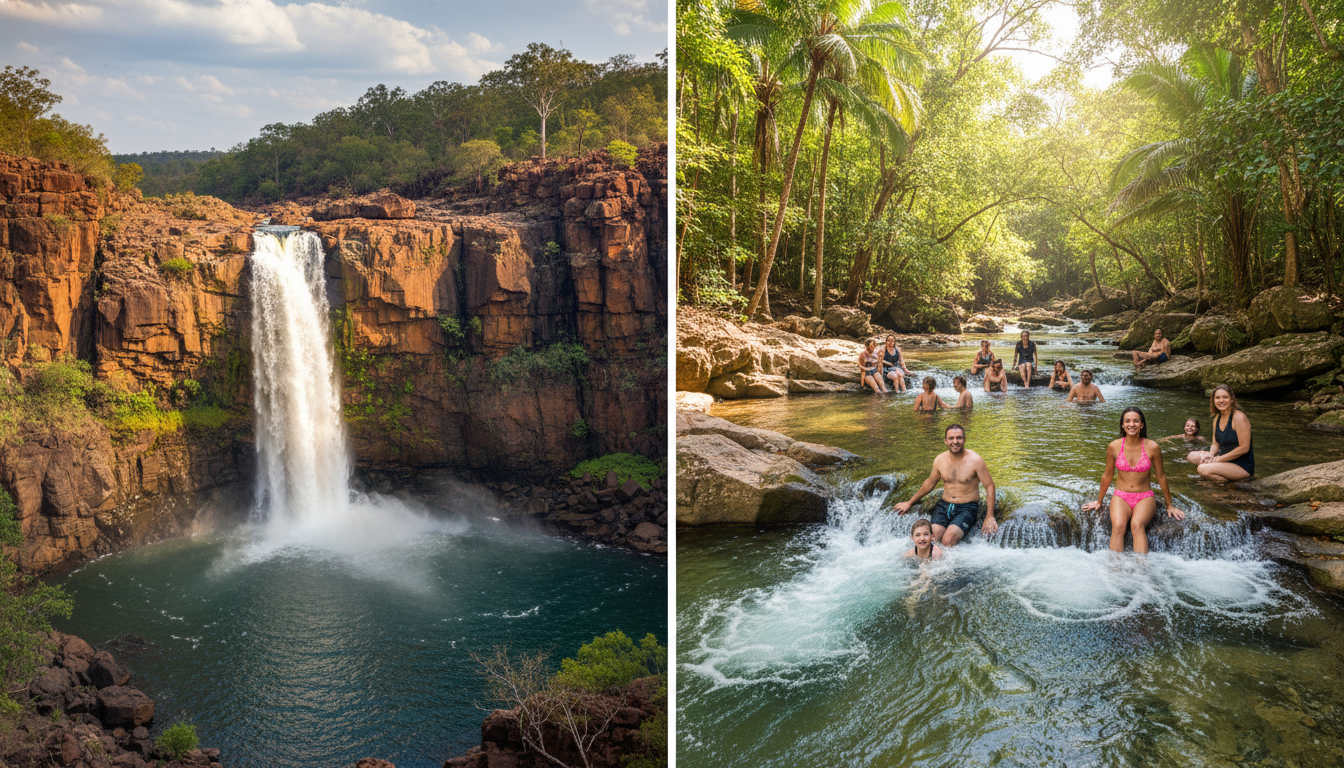
Kakadu's waterfalls, such as Jim Jim and Twin Falls, are monumental, often roaring spectacles of nature, especially after the wet season. However, they are frequently remote, requiring 4WD access, boat shuttles, and challenging walks to reach. They offer a sense of wild, untamed grandeur, an adventure to behold rather than to simply jump into. My journey to Jim Jim Falls, navigating rugged tracks and then swimming through its deep, cold plunge pool, felt like an expedition into the heart of the wilderness.
Litchfield's waterfalls, by contrast, are designed for interaction. Florence, Wangi, and Buley Rockhole are all about accessibility and the sheer joy of swimming. They are beautifully maintained, easy to reach, and provide immediate, refreshing relief from the Top End heat. They offer a more communal, family-friendly experience, a place where laughter and splashing are the dominant sounds.
Wildlife: Biodiversity Hotspot vs. Subtle Encounters
Kakadu is an internationally recognized biodiversity hotspot. Its vast wetlands, floodplains, and forests support an incredible array of wildlife, from massive saltwater crocodiles and elusive dingoes to countless bird species. The opportunities for wildlife viewing, particularly on guided tours like the Yellow Water Cruise, are unparalleled. You are truly immersed in an active, thriving ecosystem where every turn can reveal a new creature.
Litchfield, while home to various bird species and smaller marsupials, offers more subtle wildlife encounters. While you might spot a wallaby or a goanna, it's not the primary draw. The focus here is more on the geological formations and the aquatic life within the swimming holes rather than large-scale wildlife observation.
Culture and History: Ancient Living Culture vs. Geological Wonders
This is where Kakadu truly shines. It is one of the world's most significant sites for Aboriginal rock art and a place where ancient traditions are still actively practiced and shared by the Bininj/Mungguy people. The cultural depth, the sense of ancient history, and the opportunity for genuine cultural exchange with traditional owners are profound. It's a journey into the spiritual heart of Australia.
Litchfield's historical and cultural significance lies more in its geological formations and its role as a natural playground. While it has its own Indigenous connections, the primary narrative for visitors is centred on its natural beauty and recreational opportunities rather than deep cultural immersion. It's a place to connect with nature's immediate beauty, not its ancient human stories.
Accessibility and Infrastructure: Rugged Expedition vs. User-Friendly Escape
Kakadu, due to its size and diverse terrain, often requires more planning, self-sufficiency, and sometimes a 4WD vehicle, particularly if you wish to explore its more remote reaches or travel during the shoulder seasons. The infrastructure is geared towards managing a vast wilderness, with designated campsites and a few major accommodation hubs.
Litchfield is remarkably user-friendly. Most of its attractions are easily accessible by 2WD on sealed roads, and facilities are modern and well-maintained. It's a park designed for ease of access and enjoyment, perfect for those who prefer a less demanding travel experience.
Time Commitment: Days of Discovery vs. Hours of Delight
To truly appreciate Kakadu, you need several days – at least three, but ideally five or more. It's a destination that rewards slow travel and deep exploration. Each section of the park offers something different, and rushing through it would be a disservice to its grandeur.
Litchfield, conversely, can be thoroughly enjoyed in a single day trip from Darwin. While an overnight stay allows for a more leisurely pace, its main attractions are easily clustered for efficient exploration. It's the perfect choice for a refreshing burst of nature.
Which Gateway is Right for You?
The choice between Kakadu and Litchfield ultimately comes down to your priorities, time constraints, and desired travel style. There's no single "best" option, only the one that aligns most perfectly with your personal journey.
Choose Kakadu if you are:
- A deep cultural explorer: If you seek to understand and connect with ancient Indigenous culture, witness some of the world's oldest rock art, and learn from traditional owners, Kakadu is unparalleled. The spiritual resonance of the land is palpable.
- An avid wildlife enthusiast: For unparalleled opportunities to spot diverse birdlife, iconic crocodiles, and other Top End fauna in their natural, vast habitats, Kakadu is your destination.
- An adventurous traveller with time: If you have at least 3-5 days, enjoy planning, and are prepared for potentially rugged roads (or hiring a 4WD), the rewards of Kakadu's immense wilderness are boundless. It's for those who relish a sense of true expedition.
- Seeking profound immersion: Kakadu offers a comprehensive, multi-layered experience that delves into ecology, history, and culture, demanding and rewarding full immersion.
Choose Litchfield if you are:
- Seeking accessible natural refreshment: If your primary goal is to cool off in stunning natural swimming holes, enjoy beautiful waterfalls, and relax in a picturesque setting, Litchfield is perfect. It's a natural water park.
- Short on time or prefer convenience: Litchfield is ideal for a day trip or a short overnight stay from Darwin, offering a big impact with minimal logistical fuss. Its proximity and sealed roads make it incredibly easy to navigate.
- Travelling with young children or those with limited mobility: The well-maintained facilities and easy access to swimming areas make Litchfield a fantastic, family-friendly option. The immediate gratification of swimming is a huge draw.
- Looking for a relaxed, self-guided experience: Litchfield allows for a more spontaneous and laid-back visit, where you can move at your own pace between its various attractions.
Consider Both if you are:
- Seeking the ultimate Top End experience: If you have ample time (a week or more), combining both parks offers a truly comprehensive understanding of the region. You can experience the deep cultural tapestry of Kakadu alongside the refreshing natural playgrounds of Litchfield. Start with Litchfield for a relaxed introduction, then delve into the grandeur of Kakadu. This approach gives you the best of both worlds, a blend of ancient wisdom and natural joy.
My own journey has often involved both. A refreshing dip in Litchfield's Florence Falls might precede a profound sunset experience at Ubirr in Kakadu on a separate, longer trip. Each experience complements the other, painting a richer, more vibrant picture of the Top End.
Conclusion
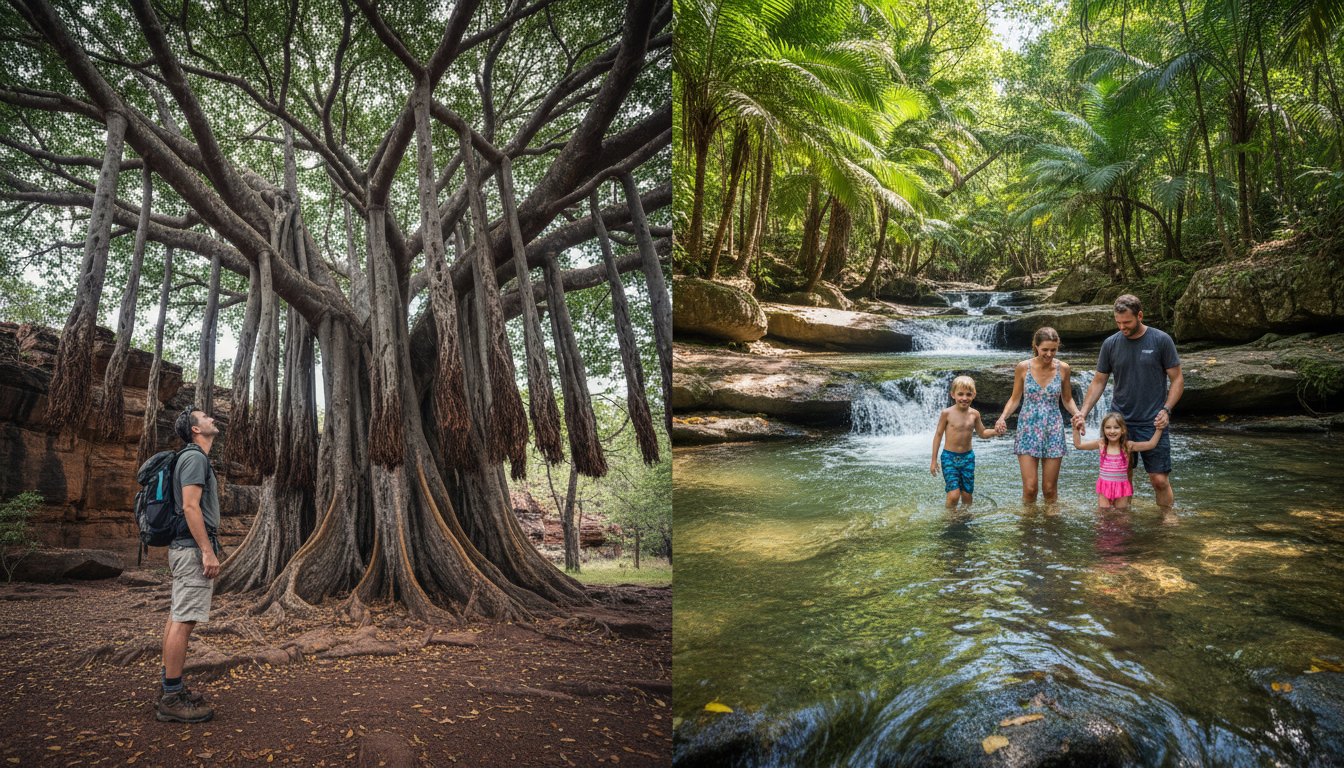
The Top End of Australia, with Darwin as its vibrant heart, offers a unique blend of ancient landscapes, profound cultural narratives, and exhilarating natural wonders. The choice between Kakadu and Litchfield National Parks is not about finding a single winner, but rather about aligning your adventurous spirit with the distinct offerings of each. Kakadu beckons with its vast wilderness, millennia of Indigenous history etched into rock, and unparalleled wildlife encounters, promising a journey of deep cultural immersion and discovery. It's a place where you don't just visit; you connect with the very soul of the land.
Litchfield, on the other hand, provides an accessible, refreshing escape, a natural playground of cascading waterfalls and crystalline swimming holes that invites immediate joy and relaxation. It's the perfect antidote to the tropical heat, offering a more immediate, tangible connection with nature's beauty.
Whether you choose the epic scale of Kakadu, the refreshing embrace of Litchfield, or ideally, embark on a journey that encompasses the best of both, your Top End adventure will be filled with unforgettable cultural stories and inspiring connections. As MLIFEON believes, it's about "More Discovery, More Experience." These iconic gateways from Darwin don't just lead to national parks; they lead to a deeper understanding of Australia's ancient heart and a richer appreciation for our planet's natural and cultural heritage. So, pack your bags, let the spirit of the Top End guide you, and prepare for an odyssey unlike any other.
Vùng Top End của Úc, một vùng đất của những cảnh quan cổ xưa và nền văn hóa sôi động, có sức hút khó cưỡng đối với những tâm hồn ưa phiêu lưu. Là một người lữ hành dày dạn kinh nghiệm đã dành nhiều thời gian khám phá vẻ đẹp hoang sơ, gồ ghề của nơi đây, tôi có thể khẳng định rằng hành trình thực sự bắt đầu ở Darwin, một thủ phủ nhiệt đới nhộn nhịp với năng lượng độc đáo như những buổi hoàng hôn của nó. Tuy nhiên, đối với nhiều người, câu hỏi lớn vẫn còn đó: cửa ngõ nào dẫn đến biên giới hoang dã này hứa hẹn một trải nghiệm sâu sắc nhất? Liệu đó có phải là vùng hoang dã rộng lớn, giàu văn hóa của Kakadu, hay thiên đường thác nước dễ tiếp cận của Litchfield?
Đây không chỉ đơn thuần là một lựa chọn về hậu cần; đó là một lựa chọn triết lý, một quyết định định hình bản chất cốt lõi cho cuộc phiêu lưu ở Top End của bạn. Cả hai công viên quốc gia đều mang đến trải nghiệm đắm chìm khó quên vào di sản thiên nhiên và văn hóa của Úc, nhưng chúng lại phục vụ những mong muốn và phong cách du lịch riêng biệt. Hãy cùng tôi đi sâu vào trọng tâm của cuộc tranh luận lớn về các công viên này, so sánh và đối chiếu hai điểm đến mang tính biểu tượng này để giúp bạn khám phá cửa ngõ nào – hoặc có thể cả hai – sẽ dẫn bạn đến những kỷ niệm đáng trân trọng nhất.
Cuộc Tranh Luận Lớn Về Công Viên: Kakadu và Litchfield
Đối với bất kỳ ai đến Darwin, tiếng thì thầm của vùng hoang dã hiện ra ngay lập tức và đầy mê hoặc. Bản thân thành phố, với lịch sử phong phú, các khu chợ đa văn hóa và cảng biển tuyệt đẹp, đã là một điểm đến riêng biệt, nhưng nó cũng đóng vai trò là bàn đạp hoàn hảo để đến các công viên quốc gia rộng lớn định hình nên Top End. Du khách thường thấy mình đứng trước ngã ba đường, suy nghĩ về lựa chọn giữa hai trong số những kho báu thiên nhiên nổi tiếng nhất của Úc: Công viên Quốc gia Kakadu và Litchfield.
Kakadu, một Di sản Thế giới được UNESCO công nhận, thường được coi là trải nghiệm Top End tinh túy, một nơi có quy mô khổng lồ và ý nghĩa văn hóa bản địa sâu sắc. Nó đòi hỏi thời gian, sự lên kế hoạch và sự trân trọng sâu sắc đối với những câu chuyện cổ xưa và thiên nhiên hoang dã. Litchfield, mặt khác, vẫy gọi với lời hứa về những thác nước sảng khoái và vẻ đẹp tự nhiên dễ tiếp cận, một nơi thoát ly lý tưởng cho những ai tìm kiếm sự hài lòng tức thì và dễ dàng khám phá.
"Cuộc tranh luận lớn về công viên" không phải là về việc cái nào vốn dĩ tốt hơn cái nào; mà là về việc hiểu những gì mỗi nơi cung cấp và điều chỉnh nó phù hợp với khát vọng du lịch cá nhân của bạn. Bạn khao khát một hành trình đắm mình vào văn hóa thổ dân cổ xưa và những cảnh quan rộng lớn, đầy thử thách, hay bạn bị cuốn hút bởi niềm vui đơn giản, hân hoan khi được đắm mình trong những hồ nước tự nhiên nguyên sơ được bao quanh bởi cây xanh tươi tốt? Hãy cùng khám phá chi tiết từng công viên, dựa trên kinh nghiệm của chính tôi để làm sáng tỏ những nét quyến rũ độc đáo của chúng.
Kakadu: Cửa Ngõ Vào Vùng Hoang Dã Rộng Lớn
Công viên Quốc gia Kakadu không chỉ là một công viên; đó là cả một thế giới riêng biệt, một bảo tàng sống trải dài gần 20.000 km vuông. Được UNESCO công nhận là Di sản Thế giới vì cả giá trị tự nhiên và văn hóa, đây là nơi văn hóa thổ dân cổ xưa hòa quyện liền mạch với cảnh quan ngoạn mục. Chuyến đi đầu tiên của tôi vào Kakadu có cảm giác như quay ngược thời gian, vào một vương quốc nơi chính mảnh đất này thở ra lịch sử.
Quy mô tuyệt đối của Kakadu rất khó hình dung cho đến khi bạn ở đó. Nó bao gồm sự đa dạng đáng kinh ngạc của các hệ sinh thái: những vùng đồng bằng ngập lụt rộng lớn đầy động vật hoang dã, những vách đá ấn tượng được chạm khắc qua hàng thiên niên kỷ xói mòn, những khu rừng mưa gió mùa tươi tốt và những đầm lầy (billabong) yên tĩnh. Sự phong phú về sinh thái này hỗ trợ một mảng động thực vật đáng kinh ngạc, bao gồm hơn một phần ba số loài chim của Úc và, tất nhiên, cả loài cá sấu nước mặn khét tiếng.
Văn Hóa và Lịch Sử Bản Địa
Điều thực sự khiến Kakadu trở nên khác biệt, đối với tôi, chính là di sản văn hóa sâu sắc của nó. Vùng đất này đã là nơi sinh sống của người thổ dân trong ít nhất 65.000 năm, biến nó thành một trong những nền văn hóa sống lâu đời nhất trên Trái đất. Công viên được quản lý chung bởi những chủ nhân truyền thống của nó, người Bininj/Mungguy, và Cục Công viên Úc (Parks Australia), đảm bảo rằng những câu chuyện và truyền thống cổ xưa của họ tiếp tục phát triển mạnh.
Tham quan các địa điểm như Ubirr và Nourlangie (Burrungkuy) là một trải nghiệm mang đậm tính tâm linh. Tôi còn nhớ rõ mình đã đứng trước những phòng trưng bày nghệ thuật đá phức tạp tại Ubirr, nơi những hình ảnh mô tả các sinh vật tổ tiên, cảnh săn bắn và những câu chuyện sáng tạo kéo dài hàng chục nghìn năm. Khi mặt trời lặn xuống đường chân trời, đổ bóng dài khắp các vùng đồng bằng ngập nước, một kiểm lâm viên đã chia sẻ những câu chuyện được truyền từ thế hệ này sang thế hệ khác. Đó không chỉ là nghệ thuật; đó là một câu chuyện sống động, một kết nối hữu hình với một chuỗi tồn tại và trí tuệ không bị phá vỡ của con người. Cảm giác bước đi trên vùng đất linh thiêng, chứng kiến lịch sử được khắc vào đá, là điều sẽ ở lại với bạn rất lâu sau khi bạn rời đi.
Gặp Gỡ Động Vật Hoang Dã
Kakadu là thiên đường cho những người đam mê động vật hoang dã. Chuyến du thuyền Yellow Water Billabong, một hoạt động không thể bỏ qua, mang đến cơ hội vô song để chứng kiến những sinh vật mang tính biểu tượng của Top End trong môi trường sống tự nhiên của chúng. Trong chuyến du thuyền đầu tiên của tôi, sự im lặng chỉ bị phá vỡ bởi tiếng động cơ nhẹ nhàng của thuyền và tiếng kêu của những loài chim kỳ lạ. Chúng tôi lướt qua những con cá sấu nước mặn khổng lồ, mắt chúng chỉ nhô lên khỏi mặt nước, quan sát chúng với sự pha trộn giữa lòng kính sợ và sự tôn trọng lành mạnh.
Bầu trời phía trên tràn ngập sự đa dạng đáng kinh ngạc của các loài chim – cò mỏ yên (jabirus), sếu brolga (brolgas), những con đại bàng biển bụng trắng hùng vĩ bay lượn trên cao. Đó là một hệ sinh thái trong sự cân bằng hoàn hảo, một minh chứng cho khả năng phục hồi của thiên nhiên và sự quản lý cẩn thận của những chủ nhân truyền thống của nó. Mỗi lần nhìn thấy đều cảm thấy như một đặc ân, một cái nhìn thoáng qua vào một thế giới phần lớn chưa bị nền văn minh hiện đại chạm tới.
Các Hoạt Động và Trải Nghiệm
Ngoài nghệ thuật đá và các chuyến du thuyền ngắm động vật hoang dã, Kakadu còn cung cấp vô số hoạt động. Có rất nhiều lối đi bộ, từ những lối đi bằng ván dễ dàng đến những chuyến đi bộ đường dài nhiều ngày đầy thử thách, dẫn đến những điểm ngắm cảnh tuyệt đẹp và những thác nước theo mùa như Jim Jim Falls và Twin Falls (thường yêu cầu xe 4WD để tiếp cận và tốt nhất nên ghé thăm vào mùa khô). Các chuyến tham quan do kiểm lâm viên hướng dẫn cung cấp những hiểu biết vô giá về hệ sinh thái, văn hóa và lịch sử của công viên, làm phong phú trải nghiệm vượt xa những gì một cuốn sách hướng dẫn có thể mang lại.
Một trong những kỷ niệm đáng trân trọng nhất của tôi là chuyến đi bộ tìm kiếm thức ăn trong rừng (bush tucker walk) với một hướng dẫn viên bản địa, người đã chỉ ra các loại cây ăn được và giải thích công dụng y học của chúng, chia sẻ kiến thức được truyền lại qua nhiều thế hệ. Kiểu học tập trải nghiệm này, trực tiếp từ những người hiểu biết sâu sắc về vùng đất, biến một chuyến thăm đơn giản thành một cuộc trao đổi văn hóa sâu sắc.
Hậu Cần và Lên Kế Hoạch
Kakadu đòi hỏi sự lên kế hoạch cẩn thận. Sự rộng lớn của nó có nghĩa là để khám phá nó một cách đầy đủ cần vài ngày, lý tưởng là từ ba đến năm ngày. Chỗ ở bao gồm từ cắm trại và di chuyển bằng caravan đến nhà nghỉ và khách sạn ở Jabiru và Cooinda. Mặc dù một số khu vực có thể tiếp cận bằng xe 2WD, nhưng nhiều địa điểm ngoạn mục nhất, đặc biệt là trong mùa mưa, yêu cầu xe 4WD. Đây là một hành trình đòi hỏi sự kiên nhẫn và chuẩn bị, nhưng phần thưởng thì vô cùng lớn.
Litchfield: Chuyến Phiêu Lưu Dễ Tiếp Cận
Trái ngược hoàn toàn với quy mô rộng lớn và chiều sâu văn hóa của Kakadu, Công viên Quốc gia Litchfield mang đến một loại phép màu khác của Top End: vẻ đẹp tự nhiên dễ tiếp cận, những thác nước ngoạn mục và những hố bơi sảng khoái. Nằm cách Darwin chỉ một tiếng rưỡi lái xe về phía nam, Litchfield thường được ca ngợi là chuyến đi trong ngày hoàn hảo hoặc một chuyến thoát ly ngắn hơn, thư thái hơn khỏi cái nóng ẩm của thành phố. Những chuyến thăm Litchfield của tôi luôn hướng đến niềm vui và sự thư giãn thuần túy, một liều thuốc bổ sảng khoái cho tâm hồn.
Sức hấp dẫn của Litchfield nằm ở vẻ đẹp tập trung của nó. Trong một khu vực tương đối nhỏ gọn, công viên tự hào có một loạt các thác nước hùng vĩ đổ xuống những hồ nước trong vắt, mời gọi du khách bơi lội, giải nhiệt và đơn giản là tận hưởng vẻ đẹp tự nhiên lộng lẫy. Đây là một nơi mà cảnh quan dường như được thiết kế để mang lại niềm vui, một ốc đảo trong cái nóng nhiệt đới.
Sự Gần Gũi và Dễ Tiếp Cận
Một trong những tài sản lớn nhất của Litchfield là sự gần gũi với Darwin. Chuyến đi thẳng tắp, hầu hết trên những con đường trải nhựa, giúp mọi loại phương tiện đều có thể dễ dàng tiếp cận. Sự dễ dàng tiếp cận này có nghĩa là bạn có thể rời Darwin vào buổi sáng và bơi dưới thác nước vào bữa trưa, biến nó thành một lựa chọn vô cùng phổ biến cho các gia đình và những người có thời gian hạn chế. Sự tiện lợi cho phép những chuyến đi ngẫu hứng, một điều xa xỉ mà Kakadu thường không mang lại.
Thác Nước và Hố Bơi
Litchfield đồng nghĩa với những thác nước tuyệt đẹp và những hồ bơi tự nhiên. Mỗi nơi đều có đặc điểm riêng biệt, mang đến những trải nghiệm độc đáo.
- Thác Florence (Florence Falls): Là địa điểm yêu thích cá nhân của tôi, thác có hai dòng nước đổ xuống một hố bơi sâu, trong vắt, được bao quanh bởi rừng mưa gió mùa tươi tốt. Con đường đi bộ xuống thác rất đẹp như tranh vẽ, và phần thưởng là một buổi bơi lội sảng khoái là vô song.
- Thác Tolmer (Tolmer Falls): Mặc dù không được phép bơi ở đây, nhưng đài quan sát mang đến một khung cảnh ngoạn mục của thác nước đổ xuống một hồ nước sâu, tròn. Đó là một cảnh tượng ngoạn mục, đặc biệt là sau những trận mưa lớn.
- Hố đá Buley (Buley Rockhole): Chuỗi thác nước xếp tầng và các hồ bơi nông này rất lý tưởng để bơi lội thư giãn, cho phép bạn di chuyển giữa các spa tự nhiên khác nhau. Đây là một địa điểm xã hội và sôi động, phổ biến với các gia đình và nhóm bạn.
- Thác Wangi (Wangi Falls): Có lẽ là thác nổi tiếng và dễ tiếp cận nhất, thác Wangi tự hào có hai thác nước đổ xuống một hồ bơi lớn, hấp dẫn. Với các tiện nghi tuyệt vời, bao gồm quán cà phê và khu vực dã ngoại, đây là một địa điểm lý tưởng để dành cả buổi chiều. Sức mạnh tuyệt đối của thác, kết hợp với sự an toàn của khu vực bơi lội, khiến nó trở nên vô cùng phổ biến.
Giải nhiệt trong những hồ bơi tự nhiên này sau một buổi sáng ấm áp ở Top End là một trong những niềm vui đơn giản của cuộc sống. Nước sảng khoái, cảnh vật xanh tươi rực rỡ, và âm thanh của nước chảy rất êm dịu. Đó là một trải nghiệm kết nối bạn trực tiếp với sức mạnh thô sơ, sảng khoái của thiên nhiên.
Đồi Mối Từ Tính
Ngoài các thác nước, Litchfield còn mang đến một hiện tượng tự nhiên hấp dẫn: Đồi Mối Từ Tính (Magnetic Termite Mounds). Những cấu trúc hình nêm cao chót vót này, cao tới hai mét, được xây dựng bởi hàng nghìn con mối nhỏ và được căn chỉnh hoàn hảo theo trục bắc-nam. Hướng này giúp điều chỉnh nhiệt độ bên trong gò mối, một kỳ công đáng chú ý của kỹ thuật tự nhiên. Đi bộ giữa những cấu trúc cổ xưa, im lặng này có cảm giác như bước vào một cảnh quan ngoài hành tinh, một cảnh tượng thực sự độc đáo.
Các Hoạt Động và Trải Nghiệm
Litchfield chủ yếu là về bơi lội, dã ngoại và tận hưởng những chuyến đi bộ ngắn, ngắm cảnh. Các con đường mòn được bảo trì tốt thường dễ đi, phù hợp với mọi cấp độ thể chất. Cơ hội chụp ảnh rất nhiều, từ việc ghi lại những chi tiết phức tạp của các gò mối đến sự hùng vĩ của các thác nước. Đây là một công viên được thiết kế để thư giãn tích cực và tương tác trực tiếp với những kỳ quan thiên nhiên của nó.
Hậu Cần và Lên Kế Hoạch
Litchfield cực kỳ thân thiện với người dùng. Hầu hết các điểm tham quan đều dễ dàng tiếp cận từ con đường trải nhựa chính, và các tiện nghi được bảo trì tốt, bao gồm bàn dã ngoại, lò nướng BBQ và nhà vệ sinh, rất phong phú. Mặc dù có thể thực hiện chuyến đi trong ngày rất trọn vẹn từ Darwin, nhưng việc ở lại qua đêm tại Batchelor gần đó hoặc cắm trại trong công viên cho phép khám phá thư thái hơn. Không giống như Kakadu, một chiếc xe 2WD hoàn toàn đủ để khám phá các điểm tham quan chính.
Đối Đầu: Thác Nước, Động Vật Hoang Dã và Văn Hóa
Để thực sự quyết định giữa Kakadu và Litchfield, hoặc để lên kế hoạch cho một chuyến đi kết hợp cả hai, việc xem xét các điểm nổi bật của chúng song song là rất hữu ích. Mỗi công viên đều vượt trội ở những khía cạnh khác nhau, thu hút các sở thích du lịch riêng biệt.
Thác Nước: Vẻ Hùng Vĩ Hoang Dã so với Niềm Hạnh Phúc Dễ Tiếp Cận
Các thác nước của Kakadu, như Jim Jim và Twin Falls, là những cảnh tượng thiên nhiên hoành tráng, thường gầm thét, đặc biệt là sau mùa mưa. Tuy nhiên, chúng thường xa xôi, đòi hỏi phải đi bằng xe 4WD, thuyền đưa đón và những chuyến đi bộ đầy thử thách để đến được. Chúng mang lại cảm giác hùng vĩ hoang dã, không thuần hóa, một cuộc phiêu lưu để chiêm ngưỡng hơn là chỉ đơn thuần là nhảy vào. Hành trình của tôi đến Jim Jim Falls, vượt qua những con đường gồ ghề và sau đó bơi qua hồ nước sâu, lạnh lẽo của nó, cảm giác như một cuộc thám hiểm vào trung tâm của vùng hoang dã.
Ngược lại, các thác nước của Litchfield được thiết kế để tương tác. Florence, Wangi, và Buley Rockhole đều là về khả năng tiếp cận và niềm vui thuần túy khi bơi lội. Chúng được bảo trì đẹp mắt, dễ tiếp cận và mang lại sự giải nhiệt tức thì, sảng khoái khỏi cái nóng của Top End. Chúng mang đến một trải nghiệm cộng đồng hơn, thân thiện với gia đình hơn, một nơi mà tiếng cười và tiếng té nước là những âm thanh chủ đạo.
Động Vật Hoang Dã: Điểm Nóng Đa Dạng Sinh Học so với Những Cuộc Gặp Gỡ Tinh Tế
Kakadu là một điểm nóng đa dạng sinh học được quốc tế công nhận. Các vùng đất ngập nước, đồng bằng ngập nước và rừng rộng lớn của nó hỗ trợ một loạt động vật hoang dã đáng kinh ngạc, từ những con cá sấu nước mặn khổng lồ và những con chó hoang dingo khó nắm bắt đến vô số loài chim. Các cơ hội quan sát động vật hoang dã, đặc biệt là trong các chuyến tham quan có hướng dẫn như Yellow Water Cruise, là vô song. Bạn thực sự được đắm mình trong một hệ sinh thái năng động, phát triển mạnh mẽ, nơi mỗi khúc quanh có thể hé lộ một sinh vật mới.
Litchfield, mặc dù là nơi sinh sống của nhiều loài chim và thú có túi nhỏ hơn, nhưng mang đến những cuộc gặp gỡ động vật hoang dã tinh tế hơn. Mặc dù bạn có thể bắt gặp một con kangaroo nhỏ (wallaby) hoặc một con kỳ đà (goanna), nhưng đó không phải là điểm thu hút chính. Trọng tâm ở đây là các cấu tạo địa chất và đời sống thủy sinh trong các hố bơi hơn là quan sát động vật hoang dã quy mô lớn.
Văn Hóa và Lịch Sử: Nền Văn Hóa Sống Cổ Xưa so với Kỳ Quan Địa Chất
Đây là nơi Kakadu thực sự tỏa sáng. Đây là một trong những địa điểm quan trọng nhất thế giới về nghệ thuật đá thổ dân và là nơi các truyền thống cổ xưa vẫn được người Bininj/Mungguy thực hành và chia sẻ một cách tích cực. Chiều sâu văn hóa, cảm giác về lịch sử cổ đại và cơ hội trao đổi văn hóa chân thực với những chủ nhân truyền thống là vô cùng sâu sắc. Đó là một hành trình vào trái tim tâm linh của Úc.
Ý nghĩa lịch sử và văn hóa của Litchfield nằm nhiều hơn ở các cấu tạo địa chất và vai trò của nó như một sân chơi tự nhiên. Mặc dù nó có những mối liên hệ bản địa riêng, nhưng câu chuyện chính dành cho du khách tập trung vào vẻ đẹp tự nhiên và các cơ hội giải trí hơn là sự đắm mình sâu sắc vào văn hóa. Đó là một nơi để kết nối với vẻ đẹp tức thì của thiên nhiên, chứ không phải những câu chuyện cổ xưa của loài người.
Khả Năng Tiếp Cận và Cơ Sở Hạ Tầng: Cuộc Thám Hiểm Gồ Ghề so với Chuyến Đi Thân Thiện Với Người Dùng
Kakadu, do kích thước và địa hình đa dạng của nó, thường đòi hỏi nhiều kế hoạch hơn, khả năng tự túc và đôi khi là một chiếc xe 4WD, đặc biệt nếu bạn muốn khám phá những khu vực xa xôi hơn hoặc đi du lịch trong mùa giao thoa. Cơ sở hạ tầng được định hướng để quản lý một vùng hoang dã rộng lớn, với các khu cắm trại được chỉ định và một vài trung tâm lưu trú lớn.
Litchfield cực kỳ thân thiện với người dùng. Hầu hết các điểm tham quan của nó đều dễ dàng tiếp cận bằng xe 2WD trên những con đường trải nhựa, và các tiện nghi hiện đại và được bảo trì tốt. Đây là một công viên được thiết kế để dễ dàng tiếp cận và tận hưởng, hoàn hảo cho những ai thích trải nghiệm du lịch ít đòi hỏi hơn.
Thời Gian Cam Kết: Nhiều Ngày Khám Phá so với Vài Giờ Thưởng Thức
Để thực sự trân trọng Kakadu, bạn cần vài ngày – ít nhất là ba, nhưng lý tưởng là năm ngày trở lên. Đó là một điểm đến khen thưởng cho những chuyến đi chậm rãi và khám phá sâu sắc. Mỗi phần của công viên mang đến một điều gì đó khác biệt, và việc vội vã đi qua nó sẽ là một sự bất công đối với sự hùng vĩ của nó.
Ngược lại, Litchfield có thể được tận hưởng trọn vẹn trong một chuyến đi trong ngày từ Darwin. Mặc dù một đêm ở lại cho phép một nhịp độ thư thả hơn, nhưng các điểm tham quan chính của nó dễ dàng được tập trung lại để khám phá hiệu quả. Đây là lựa chọn hoàn hảo cho một sự bùng nổ thiên nhiên sảng khoái.
Cửa Ngõ Nào Phù Hợp Với Bạn?
Việc lựa chọn giữa Kakadu và Litchfield cuối cùng phụ thuộc vào các ưu tiên, hạn chế về thời gian và phong cách du lịch mong muốn của bạn. Không có lựa chọn nào là "tốt nhất" duy nhất, mà chỉ có lựa chọn phù hợp nhất với hành trình cá nhân của bạn.
Chọn Kakadu nếu bạn là:
- Người khám phá văn hóa sâu sắc: Nếu bạn muốn hiểu và kết nối với văn hóa bản địa cổ xưa, chứng kiến một số tác phẩm nghệ thuật đá lâu đời nhất thế giới và học hỏi từ những chủ nhân truyền thống, Kakadu là vô song. Sự cộng hưởng tâm linh của vùng đất này là điều có thể cảm nhận được.
- Người đam mê động vật hoang dã nhiệt tình: Để có cơ hội vô song chiêm ngưỡng các loài chim đa dạng, cá sấu mang tính biểu tượng và các loài động vật khác của Top End trong môi trường sống tự nhiên, rộng lớn của chúng, Kakadu là điểm đến của bạn.
- Người thích phiêu lưu có thời gian: Nếu bạn có ít nhất 3-5 ngày, thích lập kế hoạch và sẵn sàng cho những con đường gồ ghề (hoặc thuê xe 4WD), thì những phần thưởng từ vùng hoang dã rộng lớn của Kakadu là vô tận. Đó là dành cho những người thích cảm giác của một cuộc thám hiểm thực sự.
- Tìm kiếm sự đắm mình sâu sắc: Kakadu mang đến một trải nghiệm toàn diện, đa tầng, đi sâu vào hệ sinh thái, lịch sử và văn hóa, đòi hỏi và khen thưởng sự đắm mình hoàn toàn.
Chọn Litchfield nếu bạn là:
- Tìm kiếm sự sảng khoái tự nhiên dễ tiếp cận: Nếu mục tiêu chính của bạn là giải nhiệt trong những hố bơi tự nhiên tuyệt đẹp, tận hưởng những thác nước tuyệt đẹp và thư giãn trong một khung cảnh nên thơ, Litchfield là hoàn hảo. Đó là một công viên nước tự nhiên.
- Có ít thời gian hoặc thích sự tiện lợi: Litchfield lý tưởng cho chuyến đi trong ngày hoặc nghỉ qua đêm ngắn ngày từ Darwin, mang lại hiệu quả lớn với ít rắc rối về hậu cần. Sự gần gũi và những con đường trải nhựa giúp việc di chuyển vô cùng dễ dàng.
- Đi du lịch với trẻ nhỏ hoặc những người bị hạn chế khả năng vận động: Các tiện nghi được bảo trì tốt và dễ dàng tiếp cận các khu vực bơi lội khiến Litchfield trở thành một lựa chọn tuyệt vời, thân thiện với gia đình. Niềm vui bơi lội tức thì là một điểm thu hút lớn.
- Tìm kiếm trải nghiệm thư giãn, tự hướng dẫn: Litchfield cho phép một chuyến thăm tự phát và thoải mái hơn, nơi bạn có thể di chuyển theo tốc độ của riêng mình giữa các điểm tham quan khác nhau.
Cân nhắc cả hai nếu bạn là:
- Tìm kiếm trải nghiệm Top End đỉnh cao: Nếu bạn có nhiều thời gian (một tuần hoặc hơn), việc kết hợp cả hai công viên mang lại sự hiểu biết thực sự toàn diện về khu vực. Bạn có thể trải nghiệm tấm thảm văn hóa sâu sắc của Kakadu cùng với những sân chơi tự nhiên sảng khoái của Litchfield. Bắt đầu với Litchfield để có một sự giới thiệu thư giãn, sau đó đi sâu vào sự hùng vĩ của Kakadu. Cách tiếp cận này mang lại cho bạn điều tốt nhất của cả hai thế giới, sự pha trộn giữa trí tuệ cổ xưa và niềm vui tự nhiên.
Hành trình của riêng tôi thường liên quan đến cả hai. Một lần tắm sảng khoái ở thác Florence của Litchfield có thể diễn ra trước một trải nghiệm hoàng hôn sâu sắc tại Ubirr ở Kakadu trong một chuyến đi riêng biệt, dài hơn. Mỗi trải nghiệm bổ sung cho nhau, vẽ nên một bức tranh phong phú, sống động hơn về Top End.
Kết Luận
Vùng Top End của Úc, với Darwin là trái tim sôi động của nó, mang đến sự pha trộn độc đáo của những cảnh quan cổ xưa, những câu chuyện văn hóa sâu sắc và những kỳ quan thiên nhiên thú vị. Việc lựa chọn giữa Công viên Quốc gia Kakadu và Litchfield không phải là tìm ra một người chiến thắng duy nhất, mà là về việc điều chỉnh tinh thần phiêu lưu của bạn với những điểm nổi bật riêng biệt của mỗi nơi. Kakadu vẫy gọi với vùng hoang dã rộng lớn, hàng thiên niên kỷ lịch sử bản địa được khắc vào đá và những cuộc gặp gỡ động vật hoang dã vô song, hứa hẹn một hành trình đắm mình và khám phá văn hóa sâu sắc. Đó là một nơi mà bạn không chỉ đến thăm; bạn kết nối với chính linh hồn của vùng đất.
Mặt khác, Litchfield mang đến một lối thoát dễ tiếp cận, sảng khoái, một sân chơi tự nhiên với những thác nước đổ xuống và những hố bơi trong vắt mời gọi niềm vui và sự thư giãn tức thì. Đó là liều thuốc giải độc hoàn hảo cho cái nóng nhiệt đới, mang đến sự kết nối tức thì, hữu hình hơn với vẻ đẹp của thiên nhiên.
Dù bạn chọn quy mô hoành tráng của Kakadu, sự sảng khoái của Litchfield, hay lý tưởng nhất là bắt tay vào một hành trình bao gồm cả những điều tốt nhất của cả hai, cuộc phiêu lưu ở Top End của bạn sẽ tràn ngập những câu chuyện văn hóa khó quên và những kết nối đầy cảm hứng. Như MLIFEON tin tưởng, đó là về "Nhiều Khám Phá Hơn, Nhiều Trải Nghiệm Hơn." Những cửa ngõ mang tính biểu tượng này từ Darwin không chỉ dẫn đến các công viên quốc gia; chúng còn dẫn đến sự hiểu biết sâu sắc hơn về trái tim cổ xưa của Úc và sự trân trọng phong phú hơn đối với di sản thiên nhiên và văn hóa của hành tinh chúng ta. Vì vậy, hãy xách ba lô lên, để tinh thần của Top End dẫn lối cho bạn, và chuẩn bị cho một cuộc phiêu lưu không giống bất kỳ cuộc phiêu lưu nào khác.