Darwin's Enduring Spirit: A Journey Through History, Culture, and the Top End Gateways
As a seasoned traveler and storyteller, I've always been drawn to destinations that wear their history like a badge of honor, places where the past is not just preserved but actively interwoven with t...
As a seasoned traveler and storyteller, I've always been drawn to destinations that wear their history like a badge of honor, places where the past is not just preserved but actively interwoven with the present. Darwin, the vibrant capital of Australia's Northern Territory, is one such place. Far from being merely a tropical outpost, Darwin City is a crucial gateway to the Top End, offering a profound journey into ancient Indigenous heritage, wartime resilience, and a dynamic multicultural identity.
Understanding Darwin City and its role as a fundamental gateway to the Top End requires peeling back layers of time and experience. It's a place where every street corner, every culinary delight, and every warm breeze tells a story of survival, adaptation, and an enduring spirit. This article aims to explain the multifaceted appeal of Darwin City and its Top End Gateways, offering insights into its unique cultural tapestry and historical significance.
The Multilayered History of Darwin
Darwin’s history is a compelling narrative of resilience, reinvention, and remarkable cultural fusion. Long before European arrival, this land was home to Indigenous Australians, whose connection spans tens of thousands of years. Their intricate knowledge and stewardship shaped the landscape we see today.
European exploration began in the 17th century with Dutch navigators, though permanent settlement by the British was much later. The town was founded as Palmerston in 1869, named after the British Prime Minister, before being officially renamed Darwin in 1911, honoring the naturalist Charles Darwin. Its strategic location quickly made it a vital port.
The discovery of gold in the 1870s brought a wave of prospectors and laborers from around the world, including a significant influx from China. This early multiculturalism laid the groundwork for Darwin's diverse population. The construction of the Overland Telegraph Line further cemented its importance as a communication link between Australia and the world.
Darwin's history is a testament to its strategic significance, facing both the challenges of isolation and the opportunities of connection. It has always been a city at the crossroads, a meeting point of cultures and continents. This long, rich past provides the fundamentals for understanding Darwin City and its enduring spirit.
Larrakia Country: The Traditional Owners
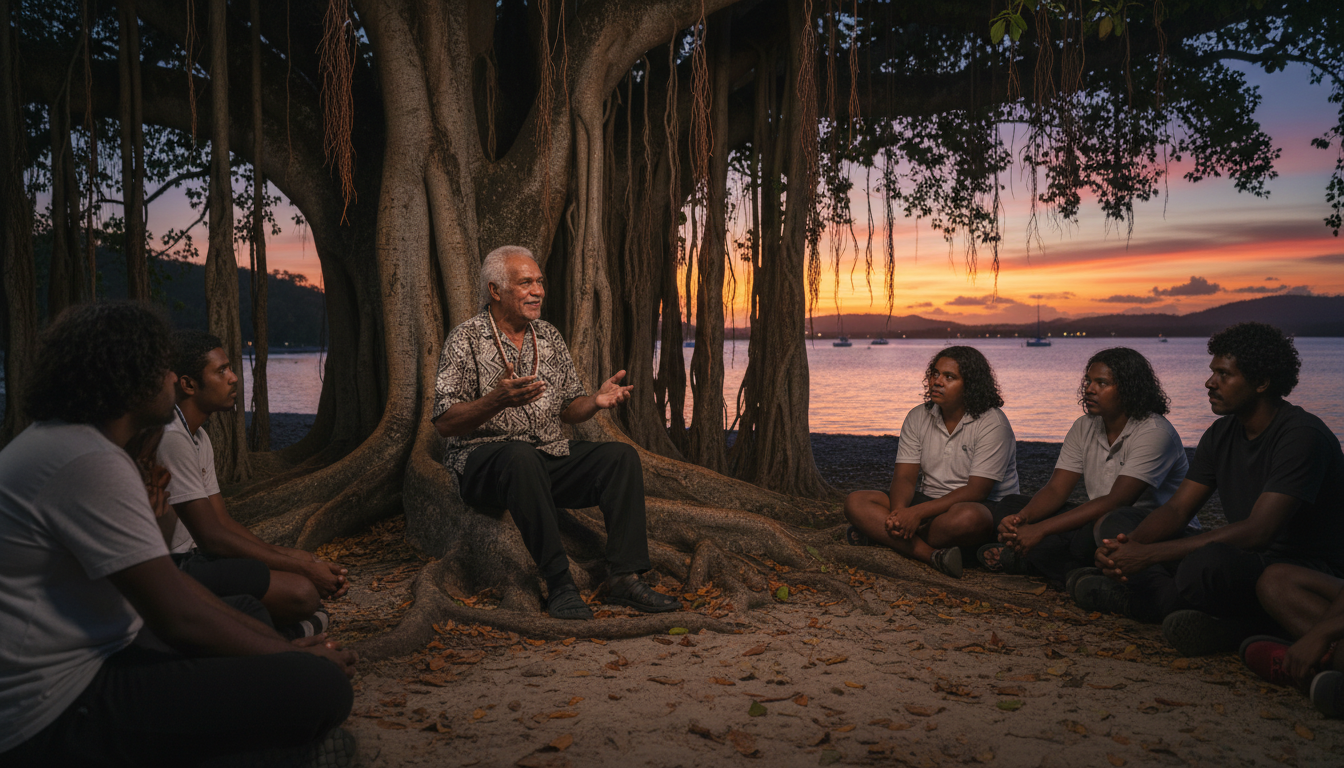
To truly appreciate Darwin, one must first acknowledge its traditional custodians, the Larrakia people. This land, known as Larrakia Country, has been their home for millennia, their culture deeply intertwined with the landscape, rivers, and seas of the region. Their stories, laws, and traditions are the very bedrock of this place.
The Larrakia are known as the "Saltwater People," with an intrinsic connection to the coastal areas and marine resources. Their Dreaming stories speak of the creation of the land and its creatures, guiding their practices and beliefs. These narratives offer profound insights into the spiritual significance of the Top End.
Today, the Larrakia maintain a vibrant presence, actively participating in cultural preservation and sharing their heritage. Visitors have opportunities to engage with Larrakia culture through art centers, cultural tours, and performances. These experiences provide invaluable perspectives on Indigenous Australia.
I vividly recall attending a Welcome to Country ceremony in Darwin, feeling the deep respect and connection the Larrakia people hold for their land. It was a powerful reminder that we are guests on ancient country, and that true understanding begins with honoring its original inhabitants. Their ongoing stewardship is a vital part of Darwin's identity.
Darwin's WWII Legacy
Darwin holds a unique and somber place in Australia's wartime history. During World War II, it became a crucial Allied military base, serving as a frontline defense and supply hub for operations in the Pacific. Its strategic position made it an inevitable target for enemy forces.
On February 19, 1942, Darwin experienced the largest single attack ever mounted by a foreign power on Australian soil. Japanese air raids devastated the city, causing significant loss of life and destruction. This day marked a turning point for Australia, bringing the war directly to its shores.
The attacks continued for over a year and a half, profoundly shaping the city's identity and the psyche of its residents. Darwin's resilience during this period is a testament to the strength of its community and the bravery of those who defended it. The city became a symbol of Australian defiance.
The wartime legacy is deeply embedded in Darwin's landscape and collective memory. It serves as a powerful reminder of the sacrifices made and the enduring impact of global conflicts on local communities. Exploring this history is fundamental to understanding Darwin City's spirit.
The Bombing of Darwin Sites
For those seeking to understand the profound impact of WWII on Darwin, visiting the various bombing sites and memorials is essential. These locations offer a tangible connection to the past, allowing visitors to reflect on the events that unfolded here. Each site tells a part of the compelling story.
The Darwin Military Museum at East Point Reserve is an excellent starting point. It provides a comprehensive overview of the city's role in WWII, featuring artifacts, interactive displays, and moving personal accounts. I remember spending hours there, absorbing the detailed exhibitions and feeling the weight of history.
Within East Point Reserve itself, you can explore concrete gun emplacements and defensive structures that once guarded the harbor. The panoramic views from these vantage points offer a sense of the strategic importance of the area, even today. It's a poignant place for quiet contemplation.
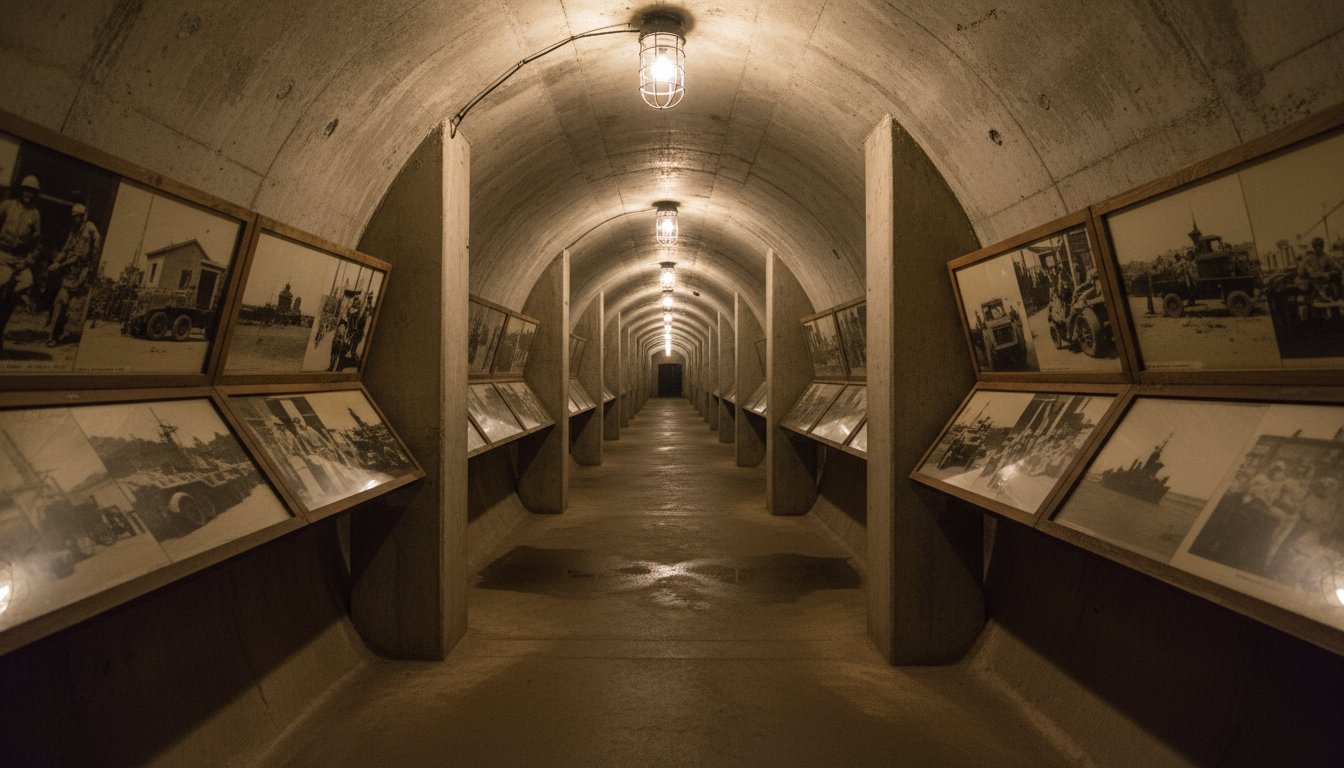
Stokes Hill Wharf and the Oil Storage Tunnels are also critical sites. The tunnels, originally built to protect fuel supplies from air raids, now offer a fascinating glimpse into wartime engineering and the constant threat faced by the city. Walking through these cool, dark tunnels, you can almost feel the urgency of their construction.
The Cenotaph on the Esplanade, overlooking Darwin Harbour, serves as a central memorial to those who served and sacrificed. Numerous smaller memorials and plaques are scattered throughout the city, each marking a particular event or honoring specific individuals. These sites collectively explain a crucial chapter in Darwin City's story.
Post-Cyclone Tracy Architecture
Darwin's history of resilience extends beyond wartime to natural disasters, most notably Cyclone Tracy. On Christmas Eve 1974, this devastating tropical cyclone struck the city, destroying over 70% of its buildings and leaving thousands homeless. It was a catastrophic event that forever altered Darwin's physical and social landscape.
From the ashes of Tracy, however, a new Darwin emerged, built with an unparalleled determination and foresight. The rebuilding effort was immense, requiring not just new construction but entirely new approaches to urban planning and building codes. The experience transformed the city's architectural identity.
Post-Tracy architecture is characterized by its emphasis on cyclone-resistant design, utilizing robust materials and reinforced structures. Many new homes featured elevated designs, strong foundations, and smaller window openings to withstand extreme winds. This pragmatic response shaped the city's modern aesthetic.
The rebuilding also fostered a sense of community and innovation. Open-plan living, elevated designs for air circulation, and extensive use of verandas became common, perfectly suited to the tropical climate. This blend of resilience and adaptation is a fundamental aspect of Darwin City's character today.
I recall seeing older homes that miraculously survived Tracy, standing as silent testaments amidst the newer, purpose-built structures. This stark contrast perfectly illustrates the city's journey from devastation to thoughtful regeneration. It's a powerful story of human spirit overcoming immense challenges.
The Asian Influence on Darwin's Food Scene
Darwin’s geographical proximity to Southeast Asia has profoundly shaped its culinary landscape, creating a vibrant and delicious fusion of flavors. For centuries, trade routes brought people, spices, and cooking techniques from Indonesia, Timor-Leste, and beyond to the shores of the Top End. This long history of interaction is palpable in its food.
The gold rush era further amplified this influence, with Chinese, Vietnamese, and other Asian migrants establishing communities and contributing their culinary traditions. Today, Darwin's food scene is a testament to this rich heritage, offering an authentic taste of Asia right on Australian soil. It's a defining aspect of Darwin City's unique culture.
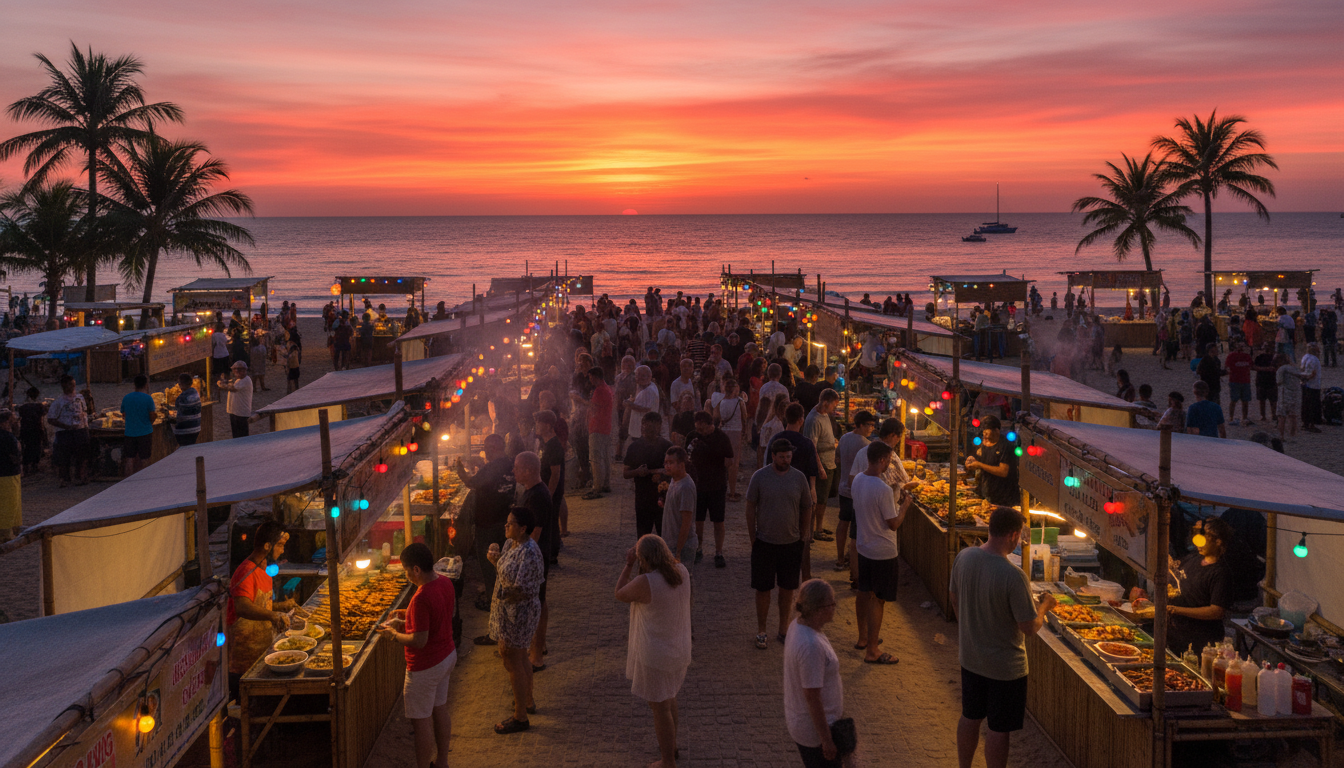
One cannot discuss Darwin's food without mentioning the iconic Mindil Beach Sunset Market. As a food lover, this market is an absolute pilgrimage. Every Thursday and Sunday during the dry season, it transforms into an explosion of sights, sounds, and aromas. Vendors from across Asia serve up incredible dishes, from steaming bowls of laksa to sizzling satay skewers.
I distinctly remember my first laksa at Mindil Beach, a steaming bowl of spicy, creamy coconut broth brimming with noodles, seafood, and fresh herbs. It was an unforgettable culinary experience, perfectly encapsulating the multicultural essence of Darwin. It felt like a culinary journey through Southeast Asia itself.
Beyond the markets, Darwin boasts an impressive array of Asian restaurants, each offering authentic flavors. You'll find fantastic Vietnamese pho, Thai curries, Indonesian rendang, and Chinese dim sum, often prepared with locally sourced seafood and produce. This fusion is not just about food; it's about cultural exchange and shared history.
The Vietnamese-Australian community, in particular, has made significant contributions to Darwin's food scene, bringing their rich culinary traditions to the forefront. Dining in Darwin is an immersive experience, a journey through the flavors of many lands, highlighting the city's role as a true melting pot. This vibrant food culture is fundamental to understanding Darwin City's appeal.
Conclusion
Darwin City is more than just a destination; it is an experience, a living tapestry woven from ancient Indigenous heritage, wartime courage, natural resilience, and a vibrant multicultural spirit. Its role as a gateway to the Top End is not just geographical but also cultural, inviting travelers to delve into Australia's deeper narratives. From the spiritual heart of Larrakia Country to the solemn reminders of WWII, and from the innovative architecture born of tragedy to the tantalizing flavors of its Asian-influenced cuisine, Darwin offers a journey unlike any other.
This exploration into Darwin City and Top End Gateways explained its complex identity, revealing the fundamentals that make it so unique. It’s a city that continually reinvents itself, yet always honors its past and embraces its diverse communities. My own travels have shown me that Darwin is a place where every interaction, every meal, and every sunset over the Timor Sea contributes to an unforgettable cultural story.
So, as you plan your next adventure, consider Darwin City. It promises more discovery, more experience, and meaningful connections that resonate long after you've left its sun-drenched shores. It truly embodies MLIFEON's spirit: "Your journey to unforgettable cultural stories and inspiring connections."
Article URL Slug
The slug is auto-generated from the article title but can be edited for better SEO.
Preview URL: mlifeon.com/generating-158
Slug Best Practices:
- • Use lowercase letters, numbers, and hyphens only
- • Keep it short and descriptive (3-5 words)
- • Include target keywords when relevant
- • Avoid special characters and spaces
Multi-Language Translations
Translate this article to Vietnamese and Chinese using AI
How Translation Works:
- • Uses Google Gemini AI for natural, fluent translations
- • Preserves all Markdown formatting and image links
- • Optimizes SEO metadata for each language
- • Creates separate translation records linked to this article
- • Translations are stored in the database (not just cached)
Export Article JSON
ℹ️ The JSON file will be downloaded to your computer. Each format has a different structure optimized for its platform.