Famous Landmarks Singapore: The Best Food Markets and Hubs
Singapore, a vibrant city-state, is renowned globally for its stunning architecture, lush gardens, and efficient urban planning. Yet, beneath the gleaming skyscrapers and manicured landscapes lies an ...
Singapore, a vibrant city-state, is renowned globally for its stunning architecture, lush gardens, and efficient urban planning. Yet, beneath the gleaming skyscrapers and manicured landscapes lies an even more profound landmark that truly defines its soul: its food markets and hawker centres. These bustling hubs are not merely places to eat; they are living museums of culture, history, and community, encapsulating the very essence of Singaporean identity.
My journeys across Southeast Asia have always highlighted the inseparable link between a culture and its cuisine. In Singapore, this connection is particularly palpable. Every hawker stall tells a story, every dish a chapter in the nation's rich culinary narrative.
To truly understand Singapore, one must embark on a gastronomic adventure through these iconic food havens. They are, without a doubt, among the most authentic and famous landmarks Singapore has to offer, each serving as a vibrant testament to the nation's diverse heritage. Here, tradition is savored with every bite, and new memories are forged amidst the tantalizing aromas and lively chatter.
Food as a Landmark: Singapore's Hawker Culture
The concept of a "food landmark" might seem unusual to some, but in Singapore, it is an undeniable reality. Hawker culture, a unique form of outdoor dining, has been an integral part of Singaporean life for generations. It represents the very heart of the nation's culinary landscape, a place where diverse communities gather to share meals.
This vibrant tradition originated from street hawkers who once plied their trade across the island, serving affordable and delicious meals. Over time, the government organized these independent vendors into dedicated hawker centres, ensuring hygiene and providing a structured environment. This evolution transformed scattered street food into a celebrated institution.
In 2020, Singapore’s hawker culture was proudly inscribed on the UNESCO Representative List of the Intangible Cultural Heritage of Humanity. This global recognition underscored its immense cultural significance, acknowledging its role in fostering social cohesion and preserving culinary traditions. It’s a testament to how food can be a profound expression of heritage.
I vividly recall my first visit to a Singaporean hawker centre. The sheer sensory overload was exhilarating – the sizzle of woks, the aroma of spices, the kaleidoscope of dishes, and the symphony of conversations. It felt like stepping into the city's collective living room, a place where everyone, regardless of background, finds common ground over a shared meal.
Hawker centres are more than just dining establishments; they are community centers, informal meeting places, and incubators of culinary talent. Each stall often represents decades, sometimes generations, of family recipes and culinary mastery. The hawkers themselves are artisans, preserving and evolving dishes that are deeply ingrained in Singapore's cultural fabric.
They embody the spirit of multiculturalism that defines Singapore, offering a melting pot of Malay, Chinese, Indian, and Eurasian cuisines all under one roof. This harmonious blend of flavors reflects the nation's diverse population, celebrating unity through shared culinary experiences. For any traveler seeking an authentic connection with Singapore, these food landmarks are an essential pilgrimage.
Maxwell Food Centre and the Famous Chicken Rice
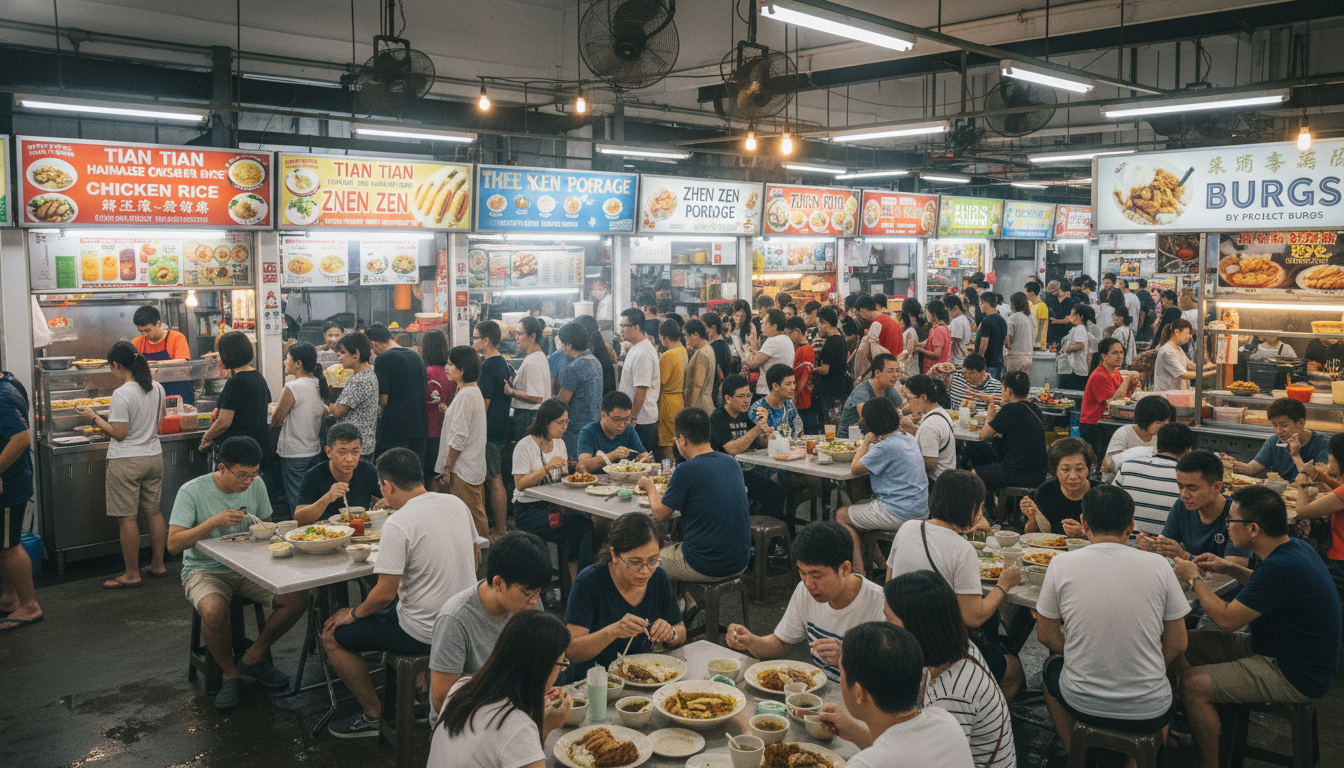
Nestled in the heart of Singapore's bustling financial district and Chinatown, Maxwell Food Centre stands as one of the most iconic and beloved hawker centres. It’s a place where office workers, tourists, and locals converge, drawn by its legendary reputation and an incredible array of dishes. This centre truly embodies the spirit of Singaporean street food elevated to an art form.
Maxwell's fame largely rests upon one dish: Hainanese Chicken Rice, particularly from the renowned Tian Tian Hainanese Chicken Rice stall. This humble dish, often lauded as Singapore's national dish, is a masterclass in subtlety and flavor. The chicken is succulent and tender, poached to perfection, while the rice, cooked in chicken broth and pandan leaves, is fragrant and rich.
When I first tasted Tian Tian's chicken rice, I understood immediately why people queued for so long. The velvety smooth chicken, coupled with the incredibly aromatic rice and the perfect blend of chili and ginger sauces, was an unforgettable experience. It’s a dish that transcends its simple ingredients, achieving culinary perfection through meticulous preparation.
Beyond the famous chicken rice, Maxwell offers a dizzying variety of other local favorites. You can find everything from flavorful Fuzhou Oyster Cake to refreshing Sugarcane Juice, and traditional local desserts. The air is always thick with the tempting scents of charring meats, simmering broths, and freshly fried delights, inviting you to explore every corner.
Dining at Maxwell is an experience in itself. The communal tables are often packed, creating a lively and convivial atmosphere where strangers share tables and conversation. It’s a testament to Singapore’s inclusive culture, where food acts as a natural bridge between people. This vibrant energy makes Maxwell a truly immersive cultural landmark.
Lau Pa Sat: The Historic Octagonal Food Market
A short stroll from Maxwell, another architectural and culinary marvel awaits: Lau Pa Sat. This beautiful Victorian-era market, with its distinctive octagonal shape and ornate cast-iron structure, is a true historical landmark. It began its life in 1894 as a wet market, evolving over the centuries into the stunning food paradise it is today.
The intricate design of Lau Pa Sat, with its soaring ceilings, Victorian columns, and delicate filigree, is a sight to behold. It stands as a testament to Singapore’s colonial past, beautifully preserved and repurposed for modern enjoyment. Dining here feels like stepping back in time, surrounded by echoes of a bygone era.
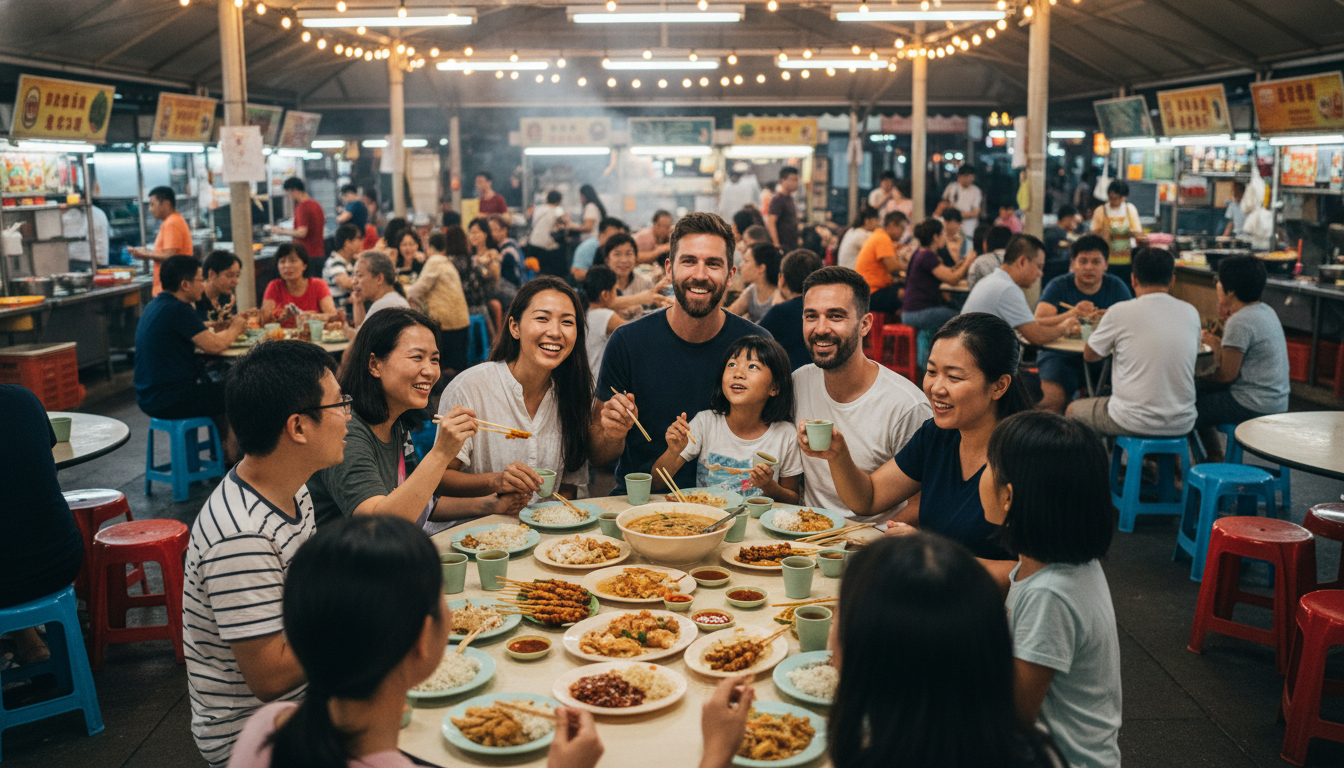
What makes Lau Pa Sat particularly special is its evening transformation into the famous "Satay Street." As dusk falls, Boon Tat Street, which runs alongside the market, is closed to traffic and lined with an incredible array of satay stalls. The air fills with the smoky aroma of grilled skewers, creating an electrifying al fresco dining experience.
My memory of dining on Satay Street is vivid: sitting at a plastic table under the stars, surrounded by the intoxicating smell of charcoal-grilled chicken, beef, and prawn satay. The succulent skewers, accompanied by rich peanut sauce and refreshing cucumber, were simply divine. It's an experience that perfectly blends history, architecture, and mouth-watering cuisine.
Lau Pa Sat offers a slightly more polished hawker experience compared to some of its counterparts, catering to both locals and tourists with its diverse offerings. From traditional local fare to more contemporary international dishes, it provides a comprehensive culinary journey. Its blend of historic charm and gastronomic excellence makes it an indispensable stop on any Singapore itinerary.
Comparing Singapore Hawker Centres to Hong Kong Food Markets
When discussing vibrant Asian food scenes, a natural comparison often arises between Singapore's hawker centres and Hong Kong's bustling food markets. Both cities boast incredible street food cultures, offering a kaleidoscope of flavors and experiences. However, their approaches, atmospheres, and culinary focuses present distinct differences.
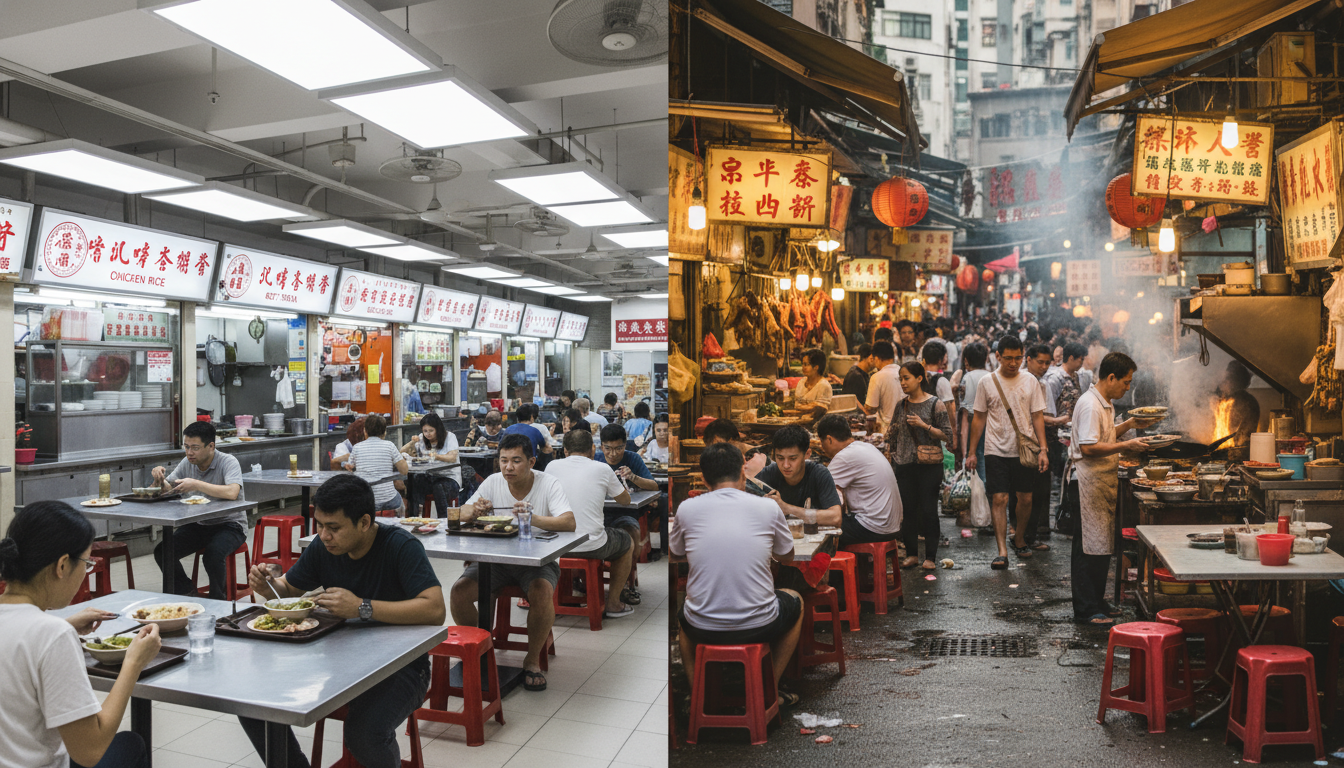
Singapore's hawker centres, like Maxwell and Lau Pa Sat, are typically purpose-built, organized structures. They emphasize hygiene and efficiency, often featuring dedicated seating areas and a clear separation between stalls. This structured environment contributes to their UNESCO intangible heritage status, highlighting a deliberate effort to preserve and promote the culture. The focus here often leans towards specific, iconic dishes like Hainanese Chicken Rice, Laksa, and Char Kway Teow, perfected by generations of hawkers.
Conversely, Hong Kong's food markets, encompassing cooked food centres within wet markets (like Tai Po Market Cooked Food Centre or Fa Yuen Street Market) and traditional dai pai dongs, often possess a more raw, chaotic charm. These venues are typically less organized, with stalls sometimes spilling onto sidewalks or tucked away in multi-story market buildings. The experience can feel more spontaneous and integrated into the city's everyday hustle.
In Hong Kong, the culinary emphasis is often on Cantonese cuisine, with an incredible variety of dim sum, roast meats like char siu and roast goose, stir-fried noodles, and seafood. The atmosphere in a dai pai dong is legendary for its boisterous energy, plastic stools, and open-air kitchens. It’s a grittier, perhaps more authentic, representation of street food that feels deeply woven into the urban fabric.
My personal experiences reveal these contrasts vividly. In Singapore, I appreciate the cleanliness and the curated culinary journey of a hawker centre, where each stall often specializes in one or two dishes. The efficiency allows for quick, delicious meals. The sense of community feels more communal and intentional.
In Hong Kong, navigating a busy wet market to find a hidden cooked food centre felt like a treasure hunt. The vibrant chaos, the intense aromas, and the sheer energy of hong kong food market experiences were exhilarating. There's a certain "anything goes" spirit that makes dining in Hong Kong uniquely adventurous, a stark contrast to Singapore's more systematic approach. Both offer incredible culinary adventures, but with distinct flavors of their respective cultures.
Newton Food Centre: A Cinematic Landmark
For many international visitors, Newton Food Centre gained significant recognition after its prominent feature in the Hollywood blockbuster "Crazy Rich Asians." The film showcased its vibrant nighttime ambiance, drawing global attention to its lively atmosphere and diverse seafood offerings. This cinematic exposure undoubtedly cemented its status as one of the famous landmarks Singapore has to offer.
Even before its silver screen debut, Newton Food Centre was a popular destination, particularly renowned for its fresh seafood and lively evening scene. While some might argue its cinematic fame has made it more tourist-centric, it retains an undeniable charm that continues to attract both locals and curious travelers. The bright lights, bustling crowds, and tantalizing aromas create an intoxicating energy.
Newton is particularly celebrated for its chili crab, black pepper crab, and grilled stingray. The experience of picking your fresh seafood, having it cooked to order, and then cracking open a succulent chili crab with your bare hands is quintessential Singapore. The rich, spicy, and tangy sauce of the chili crab is legendary, often mopped up with fluffy fried mantou buns.
My visits to Newton have always been memorable, particularly for the sheer spectacle of it all. The hawkers, with their practiced movements, cook up a storm, and the buzz of conversation fills the air. It’s an experience that’s as much about the vibrant atmosphere as it is about the delicious food.
While it might be one of the more expensive hawker centres due to its tourist appeal and seafood focus, the quality and experience often justify the price. Newton Food Centre stands as a testament to Singapore's ability to blend culinary tradition with global recognition, creating a dining landmark that is both authentic and internationally celebrated. It offers a taste of Singaporean hospitality under the stars, a vibrant beacon for food lovers.
Shihlin Taiwan Street Snacks and Local Favorites
While Singapore's hawker centres are paragons of local culinary heritage, the city's food scene is also incredibly dynamic, embracing global influences with open arms. This is where popular franchises like Shihlin Taiwan Street Snacks come into play, offering a taste of international street food that has become a beloved part of Singapore's diverse palate.
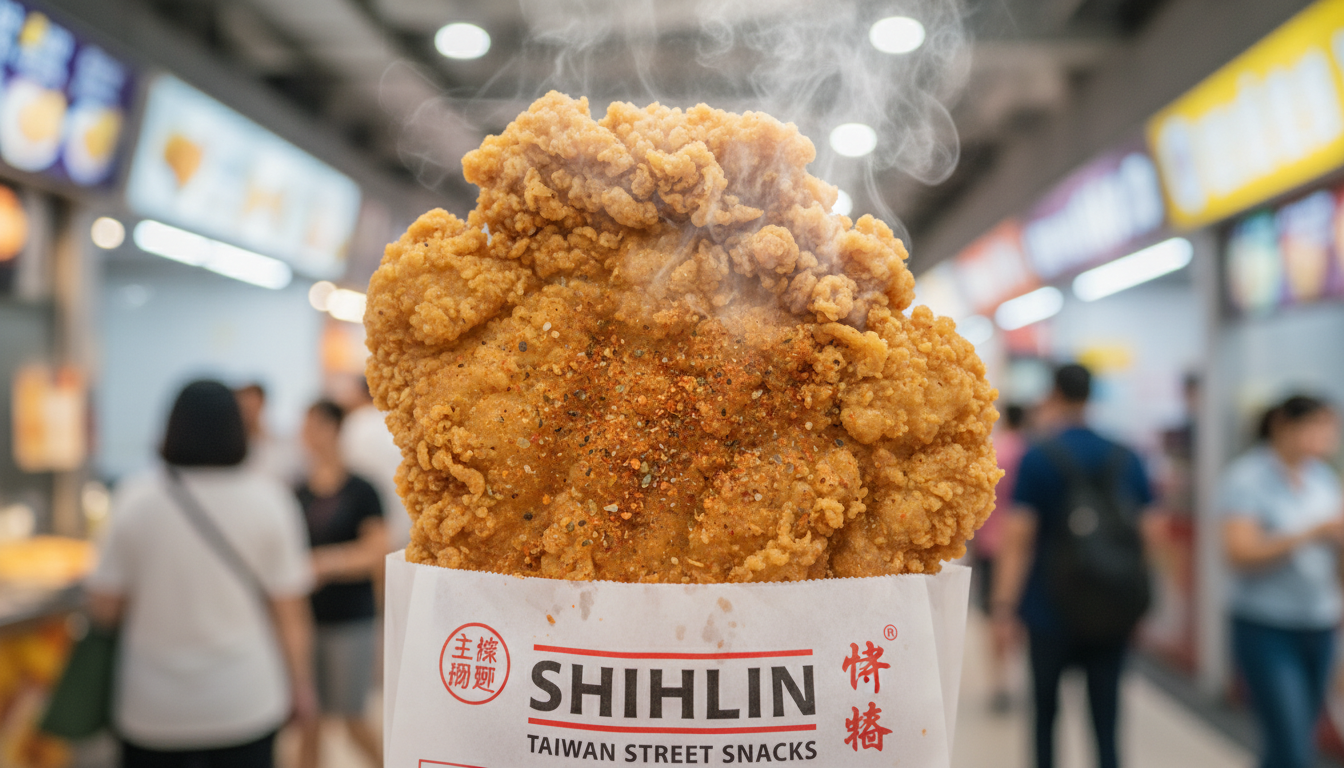
Shihlin Taiwan Street Snacks has carved out a significant niche, bringing the vibrant flavors of Taiwanese night markets directly to Singaporean malls and food courts. Their signature XXL Crispy Chicken, with its perfectly seasoned, tender meat and crunchy coating, is an absolute phenomenon. It’s a testament to how well global street food can integrate into a local food scene.
Beyond the iconic chicken, their Oyster Mee Sua, a rich, savory vermicelli soup, and Happy Lemon products also offer authentic Taiwanese treats. These establishments demonstrate Singapore's cosmopolitan approach to food, where international flavors are not just tolerated but enthusiastically adopted and enjoyed alongside traditional fare. It's a bridge between different Asian street food cultures.
However, it's crucial to remember that while these international brands thrive, they complement, rather than overshadow, the deep-rooted local favorites found in hawker centres. Singapore’s culinary identity remains firmly anchored in its indigenous dishes, which continue to be revered and sought after by all. These local specialties are the true heart of the food market experience.
Across the numerous hawker centres not explicitly detailed, countless other "local favorites" await discovery. Think of the rich, spicy broth of a Katong Laksa, the smoky char of a plate of Char Kway Teow, or the fragrant fried noodles of Hokkien Mee. Each dish reflects a specific facet of Singapore's multicultural heritage, offering a distinct flavor profile.
Then there's the beloved Satay, available beyond Lau Pa Sat, served with that irresistible peanut sauce. Or the buttery, flaky Roti Prata, perfect with a side of fish curry. These dishes, along with countless others, contribute to the tapestry of Singaporean cuisine, each a testament to the island's rich culinary traditions.
Exploring these local favorites is an ongoing adventure, revealing the depth and breadth of Singapore's culinary landscape. It’s a journey that continually reminds me of the incredible diversity available, from the familiar comfort of a Shihlin Taiwan Street Snacks offering to the profound cultural significance of a generations-old hawker recipe. Singapore truly offers an endless feast for the senses.
Conclusion: Singapore's Culinary Heartbeat
Singapore’s food markets and hawker centres are far more than mere dining venues; they are the vibrant, beating heart of the nation. They stand proudly as some of the most authentic and famous landmarks Singapore has to offer, each telling a unique story of history, community, and culinary excellence. From the bustling energy of Maxwell Food Centre to the historic grandeur of Lau Pa Sat, and the cinematic allure of Newton Food Centre, these hubs are essential to understanding the Singaporean spirit.
My personal journey through these gastronomic landscapes has consistently reinforced the idea that food is the ultimate cultural connector. It's in the shared experience of savoring a perfect plate of chicken rice, the smoky delight of satay under the stars, or the comforting warmth of a local noodle dish, that one truly connects with the soul of Singapore. The blend of local heritage with global influences, even embracing delights like Shihlin Taiwan Street Snacks, creates a uniquely rich and diverse food scene.
These markets embody MLIFEON’s tagline: "Your journey to unforgettable cultural stories and inspiring connections. More Discovery, More Experience." They offer not just meals, but immersive cultural experiences that foster understanding and appreciation for Singapore’s diverse heritage. They are living, breathing landmarks, constantly evolving yet deeply rooted in tradition.
So, when you plan your visit to Singapore, look beyond the typical tourist attractions. Dive into the vibrant world of its food markets. Allow your senses to guide you through the aromas, tastes, and sounds of these incredible hubs. It is here, amidst the shared tables and the incredible flavors, that you will truly discover the unforgettable cultural stories and inspiring connections that define this remarkable island nation.
Article URL Slug
The slug is auto-generated from the article title but can be edited for better SEO.
Preview URL: mlifeon.com/generating-77
Slug Best Practices:
- • Use lowercase letters, numbers, and hyphens only
- • Keep it short and descriptive (3-5 words)
- • Include target keywords when relevant
- • Avoid special characters and spaces
Multi-Language Translations
Translate this article to Vietnamese and Chinese using AI
How Translation Works:
- • Uses Google Gemini AI for natural, fluent translations
- • Preserves all Markdown formatting and image links
- • Optimizes SEO metadata for each language
- • Creates separate translation records linked to this article
- • Translations are stored in the database (not just cached)
Export Article JSON
ℹ️ The JSON file will be downloaded to your computer. Each format has a different structure optimized for its platform.
Publish to MLifeOn
📋 Publishing Activity Log
| Timestamp | Platform | Status | Category | API Endpoint | Message | Details |
|---|---|---|---|---|---|---|
| 2026-01-14 05:10:00 | MLIFEON | ✅ Success | travel |
http://localhost:8000/api/v1/agent/posts/
|
Article published successfully to MLifeOn |
Publishing Log Details - 2026-01-14 05:10:00Platform & StatusPlatform MLIFEON Status SUCCESS HTTP Status 201 Category travel API Endpointhttp://localhost:8000/api/v1/agent/posts/
MessageArticle published successfully to MLifeOn Full Response Data{'data': {'id': '87dc4f25-1caf-4825-8f3d-2779bb7724c9', 'url': 'https://mlifeon.com/articles/famous-landmarks-singapore-the-best-food-markets-and-hubs', 'slug': 'famous-landmarks-singapore-the-best-food-markets-and-hubs', 'title': 'Famous Landmarks Singapore: The Best Food Markets and Hubs', 'status': 'draft', 'created_at': '2026-01-14T05:09:58.362124+00:00', 'updated_at': '2026-01-14T05:09:58.362136+00:00', 'translations': {'en': 'Famous Landmarks Singapore: The Best Food Markets and Hubs', 'vi': 'Các địa danh nổi tiếng ở Singapore: Những chợ và trung tâm ẩm thực hàng đầu'}, 'dashboard_url': 'https://backend-v2.mlifeon.com/dashboard/posts/87dc4f25-1caf-4825-8f3d-2779bb7724c9/edit/'}, 'message': 'Bilingual article created successfully as draft', 'success': True}
|